Impact of Reused Litter on Gut Microbiota and Immune Development in Layer Chickens
A recent study conducted by researchers at The Ohio State University explored the effects of reused versus fresh litter on the gut microbiome and immune development in layer chicks. The study involved 160 newly hatched female Hy-Line W80 layer chicks, which were divided into two groups: one housed on fresh litter and the other on reused litter. The objective was to understand how different litter environments influence early immune responses and gut microbiota establishment. Throughout the study, body weights were recorded weekly, and samples from the ceca, ileum, and spleen were collected at days 7 and 35 for analysis.
The findings revealed that layer chicks raised on fresh litter exhibited significantly higher body weights compared to those on reused litter from day 14 to day 35. However, mortality rates were low and not significantly different between the two groups. The analysis of cecal microbiota showed notable differences in diversity at day 7, with fresh litter associated with a richer microbial community. By day 35, however, these differences diminished, indicating a convergence in microbial composition over time. At the phylum level, Bacillota was the dominant group in both litter types, while Pseudomonadota and Bacteroidota showed varying levels of abundance at different ages, suggesting a maturation of the cecal microbiome as the chicks aged.
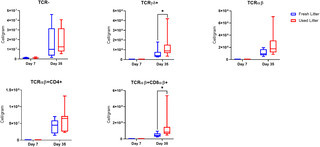
In terms of immune development, initial assessments at day 7 showed no significant differences in intraepithelial lymphocyte (IEL) subsets between the groups. However, by day 35, chicks exposed to reused litter exhibited a significant increase in various T-cell populations, indicating that the litter environment can influence immune cell distribution. These results underscore the complex interplay between litter management and the health of poultry, particularly in the context of the growing emphasis on cage-free production systems.
The study emphasizes the need for further research into how litter-associated microbial exposure can shape immune development in layer chickens, as current knowledge in this area remains limited. Understanding these dynamics is crucial for optimizing poultry production practices and ensuring the health of the birds throughout their lifecycle. The authors hope that their findings will serve as a baseline for future studies aimed at investigating the implications of litter management on poultry health and productivity.