Study Reveals hnRNPK's Role in Enhancer-Promoter Looping and Transcriptional Activation
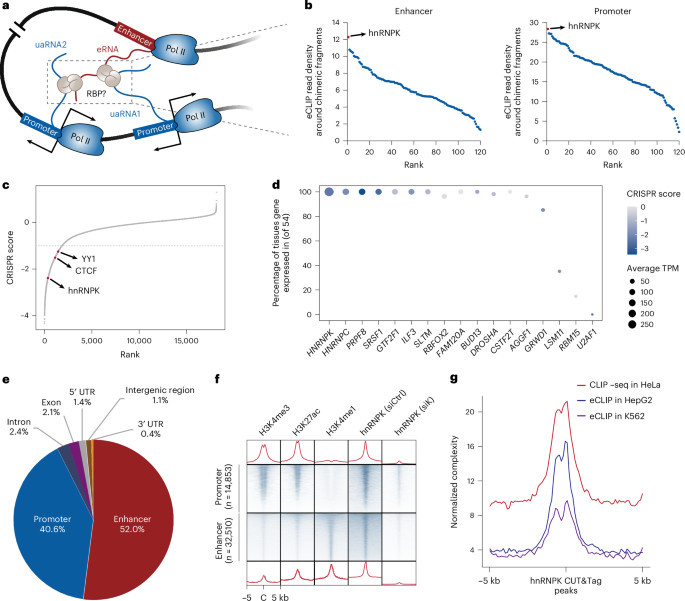
In a significant advancement in understanding gene regulation, researchers have identified hnRNPK as a key structural regulator that binds to nascent RNAs transcribed from enhancer and promoter regions. This binding promotes enhancer-promoter looping, which is critical for transcriptional activation. The study demonstrates that hnRNPK forms phase-separated condensates that encapsulate RNA polymerase II (Pol II) through its RPB3 subunit. This mechanism facilitates chromatin looping and potentially enables the recruitment of Pol II from enhancers to promoters via protein dimerization. A notable finding from the research is the impact of a mutation linked to Au-Kline syndrome (c.953+1dupG) on hnRNPK's functionality. This mutation alters the condensates from a liquid-like state to a gel-like state, which in turn leads to developmental defects in genetically modified mice. Fibroblasts derived from these mutant mice exhibited diminished enhancer-promoter looping and reduced Pol II recruitment at the promoters of critical developmental genes. These findings underscore the importance of RNA-RNA interactions mediated by RNA-binding proteins in the regulation of transcription and highlight hnRNPK's role in enhancer-promoter communication. The implications of this research extend to understanding the molecular basis of certain developmental disorders and the intricate mechanisms of gene expression control.














