OptiPrime: A Machine Learning Model Enhancing Prime Editing Efficiency
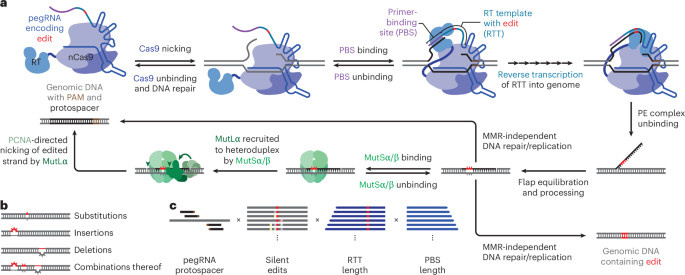
Prime editing (PE) is a groundbreaking technique that allows for precise alterations to genomic DNA within living organisms. However, the effective application of this method often necessitates extensive optimization of prime editing guide RNA (pegRNA) sequences. In response to this challenge, researchers have developed OptiPrime, a machine learning model designed to predict the efficiency of prime editing based on current mechanistic understanding. OptiPrime has demonstrated state-of-the-art accuracy in predicting outcomes for various pegRNA configurations, including nicking guide RNA (PE3) and dual pegRNA (twinPE) applications. The model has been validated to accurately learn the determinants of mammalian mismatch repair (MMR), which is crucial for enhancing prime editing efficiency. The research team showcased OptiPrime's capabilities in several therapeutic contexts, including its successful application in correcting a pathogenic mutation in a mouse model of KIF1A-associated neurological disorder, achieving over 40% efficiency in vivo. The development of OptiPrime is significant as it not only accelerates the identification of effective editing strategies but also provides a community resource through its webserver. The model's foundation is built on a comprehensive dataset that includes 74,769 prime editing efficiencies across diverse experimental conditions, allowing it to accurately predict the best pegRNA designs for specific editing tasks. This advancement in prime editing technology is poised to enhance the precision of gene therapy, potentially transforming treatment approaches for various genetic disorders. The implications of OptiPrime extend beyond immediate applications, as it also offers insights into the dynamics of complex biomolecular processes, paving the way for future innovations in the field of gene editing.














