Study Analyzes Carbon Fluxes in Pigs Across Different Production Stages
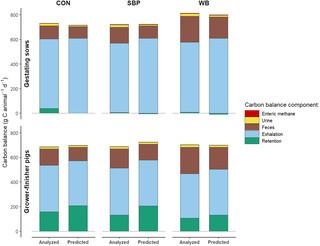
A recent study published in PLOS One has provided important insights into how dietary carbon (C) is managed within pig production systems. The research, conducted by a team from Aarhus University, focuses on the partitioning of carbon between excretion, gaseous emissions, and retention in pigs at different production stages, including weaned pigs, grower-finisher pigs, and sows. Understanding these carbon fluxes is crucial for developing integrated nutrient accounting frameworks that can effectively address nutrient losses and greenhouse gas emissions in livestock production.
The study's authors constructed carbon balance models using existing prediction equations and constants to estimate dietary carbon inputs and outputs. These models revealed variable agreement across different production stages, with grower-finisher pigs showing closer alignment between predicted and actual carbon balances compared to other categories. Notably, estimates of carbon intake and output through exhalation were consistent with previously reported values. However, predictions regarding fecal, urinary, and enteric methane outputs exhibited greater discrepancies, indicating areas where further refinement is necessary.
The significance of this research is underscored by the growing environmental concerns associated with livestock production. Pigs are the second most consumed meat globally, yet pig production is also a major contributor to anthropogenic greenhouse gas emissions. Excessive application of manure from pig farming leads to nutrient imbalances that can cause acidification and eutrophication of ecosystems. In Denmark, for instance, the manure normative system regulates nutrient content to mitigate these environmental impacts, but it currently does not account for carbon turnover.
By integrating carbon fluxes into existing nutrient management systems, this study aims to provide a more comprehensive understanding of the carbon cycle on farms. The carbon mass balance calculated in the study considers inputs from diet composition and nutrient digestibility, alongside outputs from excretion and gas emissions. This holistic approach not only aids in better nutrient management but also contributes to more accurate assessments of methane and carbon dioxide emissions from livestock.
The findings of this research highlight the feasibility of using existing equations to estimate carbon flows at the animal level while also identifying key uncertainties and data gaps that require further investigation. As the demand for pork continues to rise, addressing the environmental impact of pig production through improved carbon management practices will be essential for sustainable agriculture.