Cinnamon Supplementation Linked to Lower Blood Sugar and Cholesterol Levels

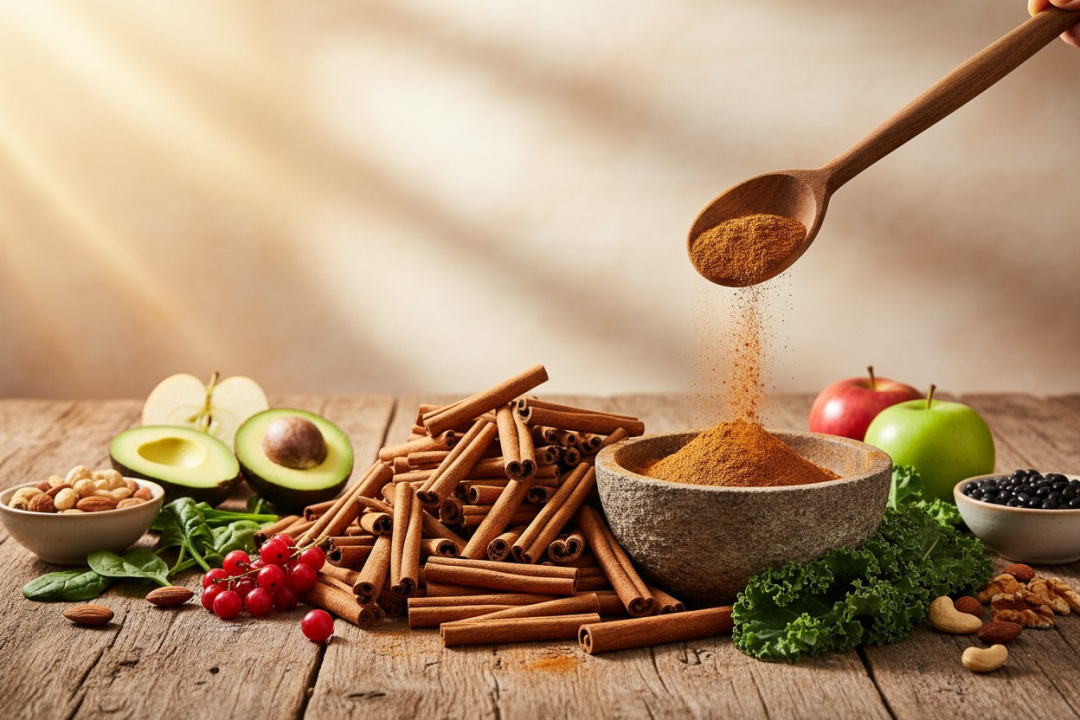
A pooled analysis of 21 meta-analyses, which included 139 placebo-controlled comparisons, has revealed that cinnamon supplementation is linked to lower levels of HbA1c, total cholesterol, LDL cholesterol, and blood pressure. This report, published in the journal Frontiers in Nutrition, highlights that the most significant effects were noted when daily amounts exceeded 1.5 grams, roughly equivalent to three-quarters of a teaspoon, and were taken for periods of two months or less.
The findings build upon years of research that have suggested cinnamon possesses insulin-like effects. Previous studies have indicated that cinnamon can lower A1C levels in diabetic patients and reduce blood pressure. The authors of the review expressed that the consistent pattern of results across the pooled studies supports the need for further investigation, although they emphasized that cinnamon should not be viewed as a substitute for prescribed medications.
The researchers analyzed 21 separate meta-analyses that focused on various populations, including individuals with diabetes, metabolic syndrome, or high blood pressure. They noted that while the results were consistent, the physiological mechanisms behind these effects remain unclear. Some earlier research suggested that daily supplementation with cinnamon extract might enhance the body's antioxidant levels, potentially alleviating oxidative stress associated with metabolic syndrome.
The review also referenced that phytonutrients from spices, including cinnamon, could influence insulin sensitivity. One source indicated that a daily intake of one teaspoon of cinnamon may assist in controlling blood sugar levels by enhancing fat cells' responsiveness to insulin. Compared to placebo, cinnamon supplementation was associated with a measurable decrease in HbA1c, a critical blood test for monitoring blood sugar control over several months, as well as declines in total cholesterol and LDL cholesterol levels.
The analysis aligns with previous reports indicating that cinnamon can lower fasting glucose levels and improve insulin sensitivity. Researchers found that shorter supplementation durations, specifically two months or less, yielded the most pronounced effects, although the reasons for this trend are still under investigation.
Cinnamon, particularly Ceylon cinnamon, which is sometimes referred to as 'true cinnamon,' contains minimal coumarin, while the more common Cassia cinnamon has higher levels. Experts recommend limiting daily intake of Cassia cinnamon to about one teaspoon, with occasional larger amounts likely safe. Consumers are advised to check labels for 'Ceylon' or 'true cinnamon' and to consult healthcare providers before combining cinnamon with diabetes medications.
The report also highlighted that dietary interventions, including pairing cinnamon with meals rich in fiber and protein, are essential for managing conditions like hypertension. The pooled analysis underscores the association between cinnamon supplementation and improvements in HbA1c, total cholesterol, LDL cholesterol, and blood pressure, while reiterating that cinnamon should not replace prescribed treatments for diabetes or metabolic disorders.