Genetic Factors Linked to Out-of-Office Hypertension in Young Adults
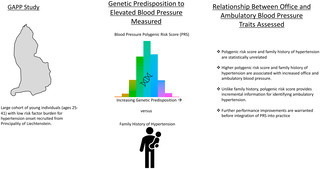
A study published in PLOS ONE investigated the genetic predisposition to high blood pressure and its implications for out-of-office hypertension. Conducted on a sample of 1,444 participants aged 25 to 41 from the Genetic and Phenotypic Determinants of Blood Pressure and Other Cardiovascular Risk Factors (GAPP) study in Liechtenstein, the research aimed to determine whether genetic predisposition could effectively identify individuals with ambulatory daytime hypertension. The study evaluated two measures of predisposition: family history of hypertension and polygenic risk scores (PRS).
The findings revealed that 12% of participants exhibited office hypertension, while 37% had out-of-office hypertension. The correlation between PRS and family history was found to be low, yet both factors were significantly associated with ambulatory blood pressure measurements. Specifically, a one standard deviation increase in PRS was linked to a 2.2 mmHg increase in blood pressure, while individuals with a positive family history experienced a 2.4 mmHg increase.
Notably, the study demonstrated that PRS provided incremental predictive value for ambulatory systolic blood pressure beyond a validated prediction model, while family history did not enhance predictive accuracy. The differences in predictive performance were modest but suggest that PRS may be a more effective tool for identifying individuals at risk of ambulatory hypertension in this population.
The GAPP study's cohort was carefully selected, excluding individuals with significant health issues, ensuring a focus on a relatively healthy demographic. The study's methodology included rigorous data collection and analysis, with blood pressure measured using validated devices and genetic predisposition assessed through established genetic markers.
While the results indicate that genetic predisposition can play a role in identifying hypertension risk, the authors caution that the gains in predictive utility are modest and further research is necessary to enhance the effectiveness of these tools in clinical settings. The study underscores the importance of identifying hypertension early, particularly in younger populations, where traditional risk factors may not yet be apparent.
This research contributes to the growing body of evidence linking genetic factors to cardiovascular health and highlights the potential for personalized approaches to hypertension management.