Social Isolation Affects Sucrose Preference in Female Drosophila via Gene Expression
Chronic stress is known to have detrimental effects on health, yet the mechanisms behind how stress induces sex differences in brain gene expression and behavior remain poorly understood. A recent study utilized Drosophila melanogaster to investigate these effects, focusing on how social isolation alters behaviors and gene expression differently in males and females. The researchers isolated male and female flies for seven days and conducted behavioral tests to assess activity, motivation, aggression, and sugar preference. Their findings indicated that social isolation led to notable sex-based behavioral differences, particularly in food choice and motivation.
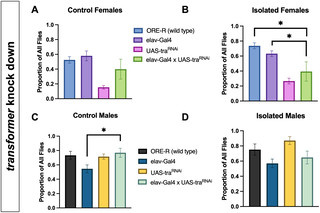
RNA sequencing analysis revealed that social isolation resulted in the upregulation of over 100 genes in isolated females, many of which are associated with reproduction and energy metabolism. Notably, the expression of the gene takeout (to) was found to be increased in females following isolation. When the researchers downregulated to expression in females, they observed a decrease in sucrose preference, contrasting with an increase in preference among males under similar conditions. This suggests that the manipulation of to expression can influence food choice in opposite directions between the sexes following social isolation.
The study also highlighted that social isolation is a significant factor affecting behaviors related to food motivation. Both isolated males and females exhibited increased attraction to food sources, but the nature of their responses differed. For instance, isolated males showed a heightened preference for yeast, while isolated females displayed a decreased preference. This divergence in behavior underscores the complexity of how social stressors can differentially impact males and females at a genetic and behavioral level.
Overall, the research emphasizes the importance of understanding sex-specific responses to social isolation and stress, particularly in relation to metabolic health. The insights gained from studying Drosophila may provide valuable information about analogous pathways in humans that could be relevant to stress-related disorders, especially those that disproportionately affect women. As social isolation continues to be a pressing public health issue, further exploration of these mechanisms may be crucial for developing targeted interventions and improving health outcomes.