High-Yield Tomato Varieties Show Varied Responses to Salinity and Drought Stress
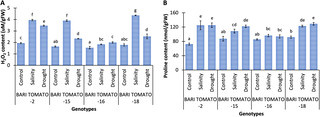
A study published in PLoS One assessed the phenotypic and biochemical responses of four high-yield tomato varieties to salinity and drought stress, conditions that are becoming increasingly prevalent due to climate change. The research focused on how these abiotic stresses affect plant growth and productivity, causing various physiological, biochemical, molecular, and morphological changes. Specifically, the study evaluated the effects of 150 mM sodium chloride and 260 mM mannitol on the tomato varieties, measuring parameters such as chlorophyll levels, root and shoot lengths, and relative water content.
The results indicated that the four BARI tomato varieties exhibited distinct physiological and biochemical responses, rather than a uniform tolerance pattern. For instance, BARI tomato 2 maintained relatively higher shoot growth and demonstrated significant proline accumulation under stress, while BARI tomato 16 retained higher chlorophyll levels, relative water content, and lower hydrogen peroxide accumulation. The activities of detoxification-related enzymes, including glyoxalase I (GLY I), glyoxalase II (GLY II), and D-lactate dehydrogenase (DLDH), were significantly influenced by both the variety and the treatment, with reduced enzyme activities observed after prolonged exposure to stress.
The study emphasizes the accumulation of proline and hydrogen peroxide in the leaves of the plants, suggesting that these markers, along with the activities of detoxification enzymes, can serve as useful indicators for assessing the stress responses of tomato plants. By providing a comparative analysis of these high-yielding varieties, the research aims to fill existing gaps in knowledge regarding the physiological responses of tomatoes to abiotic stresses, thereby contributing to the development of more resilient crop varieties.
Tomatoes are not only a staple in global diets but also serve as a model for studying stress tolerance in plants. The findings from this study could inform future agricultural practices and breeding programs aimed at enhancing the resilience of tomato crops against the challenges posed by climate change. Understanding how different tomato varieties respond to salinity and drought is vital for ensuring food security and improving agricultural productivity in affected regions.














