Study Reveals Curcumin's Selective Impact on Cancer Cells in Laboratory Setting
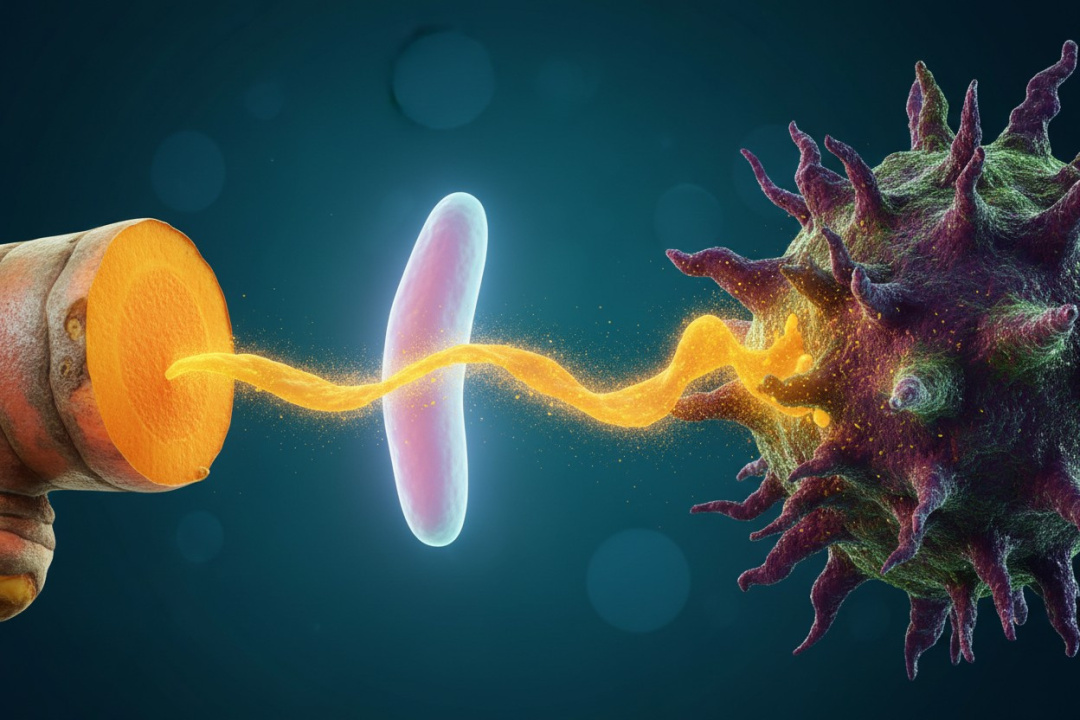
A study titled "Modulation of NF?B Signaling by Natural Compounds in Sarcoma and Normal Muscle Models" was published on June 2, 2026, in the International Journal of Molecular Sciences. Conducted by researchers at Wroclaw Medical University and the University of Wroclaw, the study explored the effects of curcumin, berberine, caffeic acid phenethyl ester, biochanin A, and cucurbitacin E on mouse fibrosarcoma cells and normal rat muscle cells. This research is significant as a considerable number of current anticancer drugs have origins in traditional remedies and natural sources. The authors noted that their findings identified two compounds, curcumin and caffeic acid phenethyl ester, that warrant further study due to their selective effects on cancer cells.
The researchers focused on the interaction of these compounds with NF-?B, a signaling protein that plays a role in tumor survival and proliferation. Chronic inflammation has been associated with approximately 15-20% of human cancers, underscoring the relevance of this research. Fibrosarcoma, a rare and aggressive cancer that develops in muscle tissue, presents challenges for treatment due to its invasive nature.
The study's results indicated that curcumin and caffeic acid phenethyl ester demonstrated a stronger targeting effect on cancer cells compared to healthy muscle cells. The researchers measured various parameters, including survival rates and energy levels, after exposing both cell types to the compounds. Notably, fibrosarcoma cells exhibited a significant decline in energy stores, losing 83% to 92% after treatment, while normal muscle cells lost between 25% and 75%. This disparity suggests that cancer cells may be less capable of recovery compared to their healthy counterparts.
Curcumin was particularly effective, driving over 75% of fibrosarcoma cells into a state of cellular senescence, compared to only 16% to 18% of untreated cells. Previous laboratory studies have indicated that curcumin can inhibit cancer cell invasion and downregulate certain cyclins in cancer cell lines.
In addition to curcumin, the study evaluated biochanin A, which, while initially appearing effective against cancer cells in culture, performed poorly in the wax moth larvae model used for toxicity testing. The larvae exposed to biochanin A showed a rebound in tumor-survival gene expression, raising questions about its efficacy. In contrast, curcumin and berberine showed promising results in the larval model, with 7 of 10 larvae treated with curcumin surviving by day five.
The authors acknowledged limitations in their study, including the use of rodent cell lines from different species and the focus on a single cancer cell line. They emphasized the need for further research involving human sarcoma models and more comprehensive assays to validate their findings. The preliminary nature of this research highlights the importance of cautious interpretation, as none of the compounds have been proven to prevent, treat, or cure cancer in humans. Curcumin, despite its potential, faces challenges regarding bioavailability in the human body, which has been documented in over 10,000 peer-reviewed studies.