Gaza Faces Severe Food Crisis as Children Struggle with Malnutrition
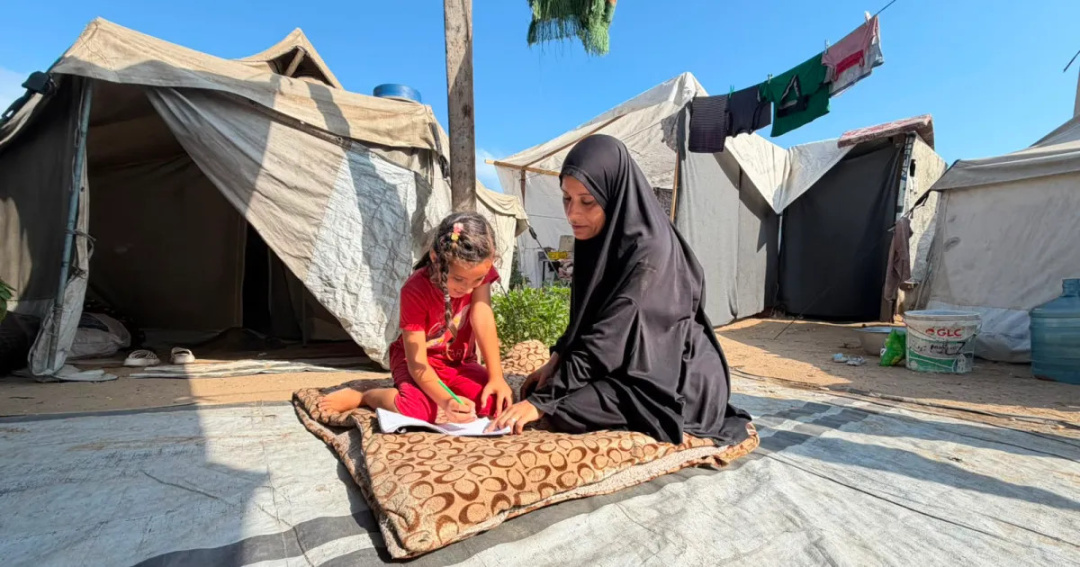
In central Gaza, Sahar al-Bardini prepares breakfast for her three children in a tent at the al-Zawaida camp, all while worrying about their next meal. As the sole breadwinner since her husband was killed in Israeli shelling three years ago, Sahar faces the daunting challenge of providing for six-year-old Omar, four-year-old Sama, and three-year-old Mahmoud. Like many families in the region, they are struggling with soaring food prices, exacerbated by Israel’s long-standing siege, which raises fears of a return to famine conditions.
During the famine of 2025, Sahar's children, particularly Omar and Sama, suffered from severe malnutrition. Basic food items like eggs and vegetables were scarce and unaffordable. Although the family can now eat more regularly, they still only manage one meal a day. The lingering effects of the previous famine are evident, as it took months for the children to regain their health and weight after the crisis.
Sahar expresses her deep concern for her children's health, stating, "My biggest fear is that my children will become weak again. I want to see them healthy, but the food they need isn’t easy for me to provide every day."
The United Nations Office for the Coordination of Humanitarian Affairs (OCHA) recently warned that Gaza is facing a severe food emergency that could escalate into another famine. Justin Brady, head of OCHA in Palestine, highlighted that 67 percent of Gaza’s population is experiencing food insecurity, with over 200,000 individuals living in conditions that typically precede a formal famine declaration.
In Sahar's community, reliance on community kitchens has become essential for many families. These kitchens provide basic meals, primarily rice and other staples, but often lack the variety and nutrition children need for proper growth. Sahar notes, "The meal fills their stomachs, but it doesn’t contain everything a child’s body needs to be properly nourished and regain strength."
With limited financial resources, Sahar makes the most of any food vouchers or assistance she receives, but it is never sufficient to meet all their needs. This forces her to prioritize food above all else, followed by clothing and medical necessities.
Another mother, Shimaa, recounts her struggles to find adequate nutrition for her two-year-old daughter, Selina, during the last famine. She often resorted to alternatives like lentils when milk was unavailable, highlighting the desperate measures families must take to feed their children. Shimaa works tirelessly to provide for Selina, who remains weak and malnourished even after the famine's end.
Nutrition specialist Dr. Ghada Jibril emphasizes that the current food crisis has forced parents to depend on limited food sources, which can lead to significant gaps in children's diets. She stresses that recovery from malnutrition requires not just enough food, but a varied diet rich in protein, iron, vitamins, and minerals essential for healthy growth and development. Dr. Jibril warns that the end of acute hunger does not equate to an immediate resolution of malnutrition effects, underscoring the need for ongoing nutritional support and care for affected children.