Plastic Waste Threatens Livestock Health and Food Security for South African Farmers
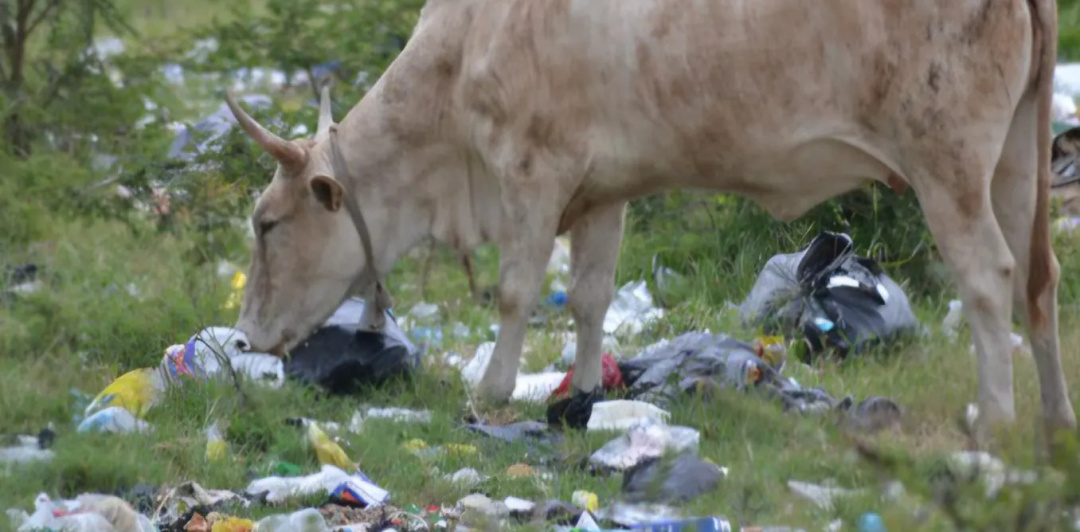
Agriculture serves as the primary source of income for communities in rural Mpumalanga, located in the northeast of South Africa. In this region, goats and cattle graze freely across communal grasslands. However, these lands have increasingly become littered with plastic waste, including bags, food wrappers, and bottles. During the dry season, when fresh grass is scarce, livestock often consume whatever they find, including harmful plastic materials. A recent study conducted by researchers Linton Munyai, Nomcebo Madonsela, Mwazvita Dalu, and Tatenda Dalu investigates the effects of plastic pollution on livestock health and rural livelihoods in Nkomazi, Mpumalanga, and the coping strategies employed by local farmers. The study involved interviews with 40 smallholder farmers who rely on communal land for grazing their cattle, goats, and chickens, with most participants being cattle farmers.
Research has established that livestock cannot digest plastic, which leads to severe health issues such as stomach and intestinal blockages. Over time, these conditions result in weight loss, poor body condition, and diminished growth and reproductive capabilities. In extreme cases, ingestion of plastic can lead to the death of the animals. Farmers reported witnessing these symptoms in their livestock, with one stating, "One of my cows ingested plastic, which blocked and tangled its digestive system. It couldn’t defecate properly and eventually died." The loss of even a single animal can place additional strain on households already grappling with poverty, unemployment, and recurring droughts. Livestock not only provide essential food sources like meat and milk but also serve as a form of savings for families during financial hardships. Furthermore, cattle hold significant cultural importance in South Africa, playing a role in traditional marriage negotiations and ceremonies honoring ancestors.
The ingestion of plastic by livestock also raises concerns regarding the quality of their manure, which is commonly used as organic fertilizer. The presence of microplastics in manure could adversely affect soil quality and crop production, threatening the long-term sustainability of rural farming systems. All farmers interviewed acknowledged the harmful impact of plastic pollution on their livestock but expressed that they could not tackle the issue independently. The root of the problem lies in the pervasive presence of plastic waste, stemming from inadequate waste collection, illegal dumping, and diminishing grazing lands. During droughts, when food sources are scarce, livestock are more likely to consume plastic mixed with vegetation.
Many villages in the area lack regular municipal waste collection and proper waste disposal facilities. Even if a farmer maintains a clean property, they cannot control waste discarded by others or plastic carried by the wind. Farmers expressed frustration, stating, "People dump waste everywhere; there’s nothing we can do." To address the issue, they emphasized the need for municipalities to conduct regular waste collection in grazing areas. Additionally, the encroachment of housing into former grazing lands and the conversion of communal land for crop farming have reduced available grazing space for livestock.
While 95% of farmers indicated a willingness to reduce their plastic usage, they reported a lack of viable alternatives. Traditional waste management practices, such as composting or burning, do not effectively address plastic waste, which remains in the environment for decades. Despite these challenges, the resilience of rural farmers is evident as they develop their own methods to protect their livestock. Many cannot afford veterinary care or live far from veterinary services, leading them to rely on home remedies. One farmer noted, "We mix vinegar and Coke, give it to the livestock, and it helps them pass the plastic." However, the scientific evidence supporting the effectiveness of these remedies is limited.
Farmers also attempt to minimize exposure to plastic by keeping goats in fenced enclosures, removing visible plastic, and avoiding heavily polluted grazing areas. They collaborate to clean up grazing land, as one farmer recounted, "We once went to clean a dam area with a lot of plastic." However, these strategies have limitations since livestock still depend on communal grazing lands, especially during dry seasons. As one farmer lamented, "There’s nothing we can do, as we pay people to take the animals to feed. They let the livestock roam, even in polluted areas. We can’t lock the animals in because they’ll starve."
The ultimate solution lies in preventing plastic from reaching grazing lands in the first place. This requires a collective effort from municipalities, government departments, traditional leaders, farmers, researchers, and local communities. Improved waste collection, increased recycling efforts, and action against illegal dumping are essential steps toward addressing this issue. Farmers also require more support, particularly during droughts when the risk of livestock consuming plastic increases. Enhanced access to animal feed, veterinary services, and practical guidance would help mitigate this risk. Community leaders and groups can play a vital role in organizing clean-up campaigns, identifying dumping hotspots, and promoting responsible waste disposal practices. While farmers understand the dangers posed by plastic, it is crucial for the entire community to recognize how plastic pollution affects livestock, food security, and rural livelihoods.