Study Links Early Junk Food Diet to Memory Disruption in Rats
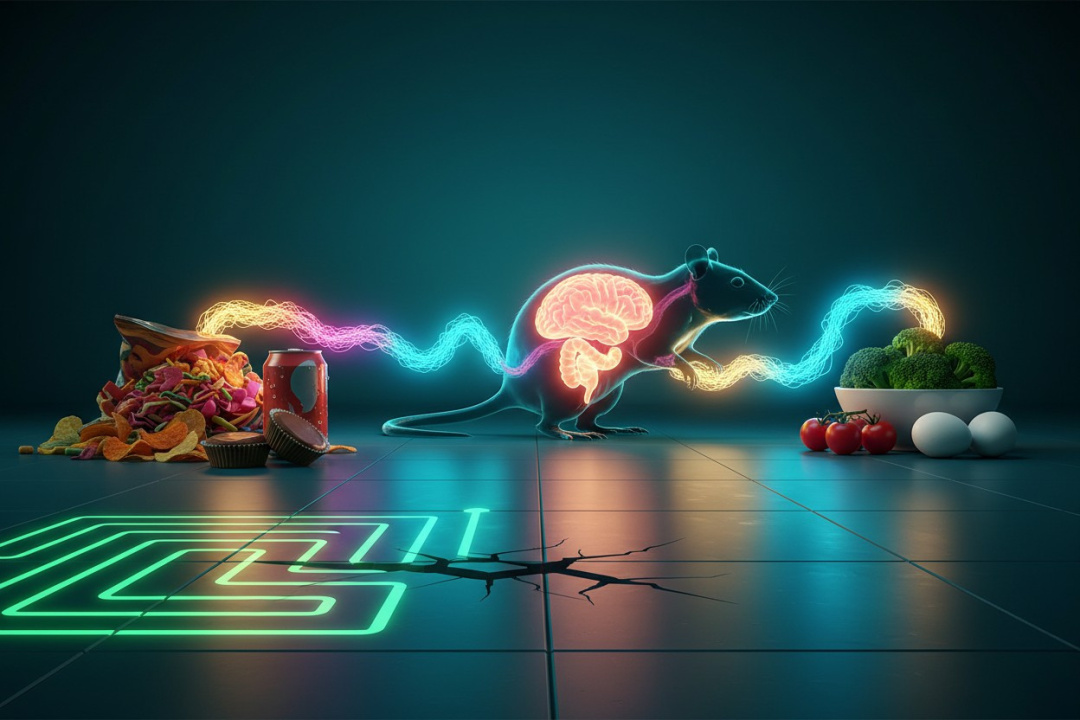
Researchers at the University of Southern California have uncovered significant findings regarding the effects of early-life junk food consumption on memory in rats, as reported in the journal Nature Communications. The study reveals that a diet high in fat and sugar can disrupt the signals transmitted from the gut to the brain through the vagus nerve, which plays a crucial role in helping animals remember where they have recently eaten. This research builds on previous studies linking adolescent junk food diets to long-term memory impairments in adulthood.
In their investigation, the researchers utilized fiber photometry to measure the release of acetylcholine in the hippocampus while the rats consumed food. They observed that acetylcholine levels increased during eating, peaking later in the meal, and remained elevated post-meal. Interestingly, calorie-free saccharin drinks did not elicit this response, while real sugar and fat did. This suggests that the components of a junk food diet specifically trigger the brain's memory response related to food consumption.
The study identified cholecystokinin, a hormone released by the gut that signals satiety, as a likely messenger in this signaling pathway. Previous research has linked lower levels of acetylcholine to conditions like Alzheimer's disease. Notably, high-fat, high-sugar diets have been shown to alter hippocampal memory circuits within days, even before any weight gain occurs.
In the experimental setup, young rats were given unrestricted access to high-fat foods such as potato chips and chocolate peanut butter cups, along with sugary beverages, for a duration of 30 days. Following this period, they were returned to a standard diet. The results indicated that the rats exposed to junk food did not exhibit the usual post-meal increase in acetylcholine and displayed a diminished behavioral response to appetite-suppressing hormones. Over the course of six days, these rats also consumed more food overall, suggesting that their early diet dulled the gut's ability to signal fullness and impaired the brain's capacity to remember meals.
In maze tests designed to assess memory, healthy rats consistently returned to a food-containing hole, while those with a severed vagus nerve performed at chance levels. Although the junk food rats performed better than chance, they still lagged behind the control group. Brain recordings indicated that healthy rats exhibited acetylcholine spikes that distinguished correct from incorrect choices, a response absent in rats lacking vagus nerve function.
The findings underscore the importance of the vagus nerve in transmitting meal-related signals that assist the hippocampus in encoding food locations. While the study's results are compelling, the authors caution that they do not establish a direct correlation to human health. They advocate for further exploration of the gut-brain pathway in humans, especially given that higher consumption of ultra-processed foods has been associated with reduced attention and increased dementia risk in adults.
The study was limited to male rats, prompting the researchers to call for additional studies to determine if similar effects occur in female rats or humans. They also noted that other signals, such as GLP-1, might contribute to sustained post-meal brain activity. Funding for the research was provided by various institutions, including the National Institute of Diabetes and Digestive and Kidney Diseases and the National Institute on Aging. The authors emphasized the need for further investigation into the implications of their findings for human dietary practices and brain health.