Leptospira interrogans Disrupts Renal Epithelial Cell Migration and Repair Mechanisms
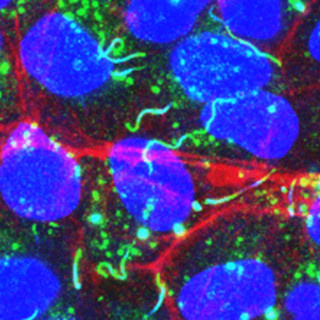
Leptospira interrogans is recognized as a significant causative agent of leptospirosis, a bacterial zoonotic disease that can lead to severe complications, including acute kidney failure. This condition is characterized by the detachment of renal proximal tubule epithelial cells (RPTECs) from their basement membrane, potentially resulting in chronic kidney disease. The kidneys have an intrinsic capacity for self-repair following acute injury, primarily through a process known as collective cell migration, where cells move as cohesive units. This migration is facilitated by mechanical forces transmitted between cells via mechanosensors located at cell junctions. However, the impact of L. interrogans on these mechanisms has not been thoroughly examined until now.
The study aimed to analyze the effects of L. interrogans infection on the cytoskeletal network of RPTECs and to elucidate the mechanisms underlying epithelial repair. Researchers conducted a proteome-wide analysis of protein ubiquitination in infected RPTECs to understand the role of proteasomal inhibitors in this context. They found that L. interrogans infection led to the disruption of the microtubule and F-actin cytoskeletal networks, which in turn caused aberrant collective cell migration and delayed wound healing. Notably, the application of proteasomal inhibitors improved wound healing, suggesting a potential therapeutic avenue for enhancing epithelial repair after infection.
The findings indicate that L. interrogans alters the mechanosensor circuit at cell junctions, leading to disruptions in the cytoskeletal framework and impairing the epithelial repair response. This disruption is significant because it highlights the complex interplay between bacterial infection and host cell repair mechanisms. The study underscores the need for further research into the specific pathways involved in these processes, which could inform the development of new treatments for leptospirosis and its associated complications.
In conclusion, the research sheds light on the molecular interactions between L. interrogans and renal epithelial cells, emphasizing the importance of understanding these mechanisms to devise effective therapeutic strategies for preventing chronic kidney damage following leptospirosis infection. The study's implications extend beyond immediate infection management, potentially guiding future research into renal repair and regenerative medicine.














