Study Examines Impact of Pelleting and β-Mannanase on Poultry Feed Efficiency
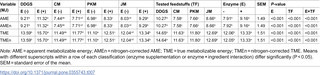
A recent study published in PLoS One explored the effects of pelleting and β-mannanase supplementation on the nutrient digestibility and metabolizable energy of four alternative feed ingredients: distillers dried grains with solubles (DDGS), copra meal, palm kernel meal (PKM), and jatropha meal (JM). Conducted using precision-fed Single Comb White Leghorn roosters, the research aimed to address the increasing global demand for poultry products and the associated challenges with conventional feed ingredients.
The study consisted of two independent experiments. In the first experiment, the ingredients were offered in either mash form or as pellets produced under controlled conditions to minimize nutrient damage. The second experiment involved supplementing mash samples with β-mannanase at a rate of 0.25% as-fed basis. The researchers measured various parameters, including apparent dry matter digestibility, nitrogen retention, and several metabolizable energy values, such as apparent metabolizable energy (AME) and true metabolizable energy (TME).
Results indicated that pelleting significantly improved dry matter digestibility, nitrogen retention, and all metabolizable energy parameters across the ingredients, particularly in DDGS and jatropha meal. Additionally, β-mannanase supplementation enhanced nutrient and energy utilization, especially in copra meal and palm kernel meal, which are rich in β-mannan-containing non-starch polysaccharides. These findings suggest that both pelleting and enzyme supplementation can enhance the nutritional value of fibrous feed ingredients, promoting their efficient use in poultry diets.
The study highlights the growing interest in utilizing agro-industrial byproducts as sustainable feed alternatives, particularly in tropical and developing regions where traditional feed resources may be limited. Distillers dried grains, copra meal, and palm kernel meal are noted for their availability and cost-effectiveness, yet their high fiber content can restrict nutrient digestibility. Jatropha meal, while promising due to its high protein content, poses challenges due to potential antinutritional factors.
The findings underscore the importance of feed processing technologies and enzyme supplementation in improving the feeding value of alternative resources. The research also points to a need for further systematic evaluations of feed ingredients under standardized experimental conditions to optimize poultry production systems. Overall, the study provides valuable insights into how pelleting and β-mannanase can improve the efficiency of alternative feed ingredients in poultry diets, which is crucial for meeting the rising demand for poultry products worldwide.














