Regulatory Mechanisms of YGP1 Gene Expression in Yeast Under Glucose Availability
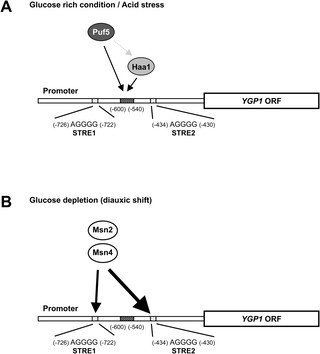
In a recent study published in PLoS One, researchers explored the regulatory mechanisms of YGP1 gene expression in Saccharomyces cerevisiae, particularly in relation to glucose availability. The study highlights how yeast cells adapt to fluctuating nutrient conditions by dynamically regulating gene expression to ensure survival under stress. YGP1, a secretory glycoprotein, is notably induced during periods of nutrient deprivation, especially glucose starvation. The research identifies two distinct pathways that regulate YGP1 expression based on glucose levels. Under conditions rich in glucose, YGP1 expression is positively regulated by the RNA-binding protein Puf5, which targets a specific region in the YGP1 promoter. This regulation is partly mediated by the transcriptional activator Haa1, ensuring that YGP1 expression occurs rhythmically during the M phase of the cell cycle. Conversely, when glucose is depleted, YGP1 expression is strongly induced by the transcription factors Msn2 and Msn4, which respond to stress signals and bind to the stress-responsive elements in the YGP1 promoter. The study also highlights the physiological significance of YGP1 expression, noting that the Puf5-mediated regulation contributes to acid stress responses and supports long-term cell survival in yeast lacking Puf5. These findings underscore the critical role of YGP1 in helping yeast cells adapt to changing environments by fine-tuning gene expression based on nutrient availability. The research provides new insights into the regulatory mechanisms governing secreted proteins and their importance in cellular adaptation.














