Study Reveals Metabolic Reprogramming Can Induce β Cell Regeneration from α Cells
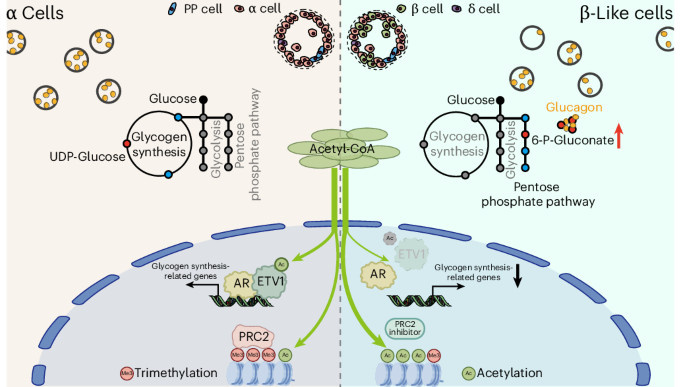
The loss of functional β cells is a significant characteristic of diabetes, making the restoration of β cell mass a crucial focus for developing targeted therapies. One promising approach involves converting non-β cells, such as α cells within the pancreatic islet, into insulin-producing cells. While various compounds have been discovered that can induce β cell-like features in α cells, translating these findings into clinical applications has proven challenging. In a recent study, researchers identified PRC2 inhibitors as powerful agents that promote β cell-enriched gene expression in α cells by modulating the AR–ETV1 complex. The inhibition of AR not only suppresses glycogen synthesis but also enhances the pentose phosphate pathway, which is vital for cellular metabolism. Furthermore, the study demonstrated that direct metabolic reprogramming using methyl esterified 6-phosphogluconate, an intermediate metabolite from the pentose phosphate pathway, can induce β cell-like features in α cells. This intervention not only stimulates the regeneration of β cells but also alleviates diabetes symptoms. The findings underscore the potential of metabolic reprogramming as a therapeutic strategy for diabetes, highlighting the importance of further research in this area to explore its clinical applications. The study contributes significantly to understanding how metabolic pathways can be manipulated to restore insulin-producing cell populations in the pancreas, which could lead to innovative treatments for diabetes.