New mRNA Vaccine Shows Promise Against Dengue Virus in Mice
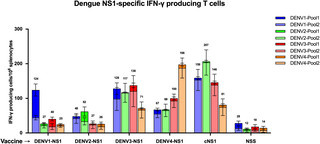
Dengue virus (DENV) continues to pose a significant global health challenge, with four distinct serotypes complicating vaccine development. A recent study has introduced a novel consensus dengue NS1 mRNA vaccine designed to enhance cross-serotype immunity. The researchers created a consensus NS1 (cNS1) antigen by combining sequence elements from all four DENV serotypes, achieving 78-89% amino acid identity. This cNS1 was encoded in nucleoside-modified mRNA and formulated in lipid nanoparticles (mRNA–LNPs). When administered to BALB/c mice at a low dose of 0.2 µg, the vaccine elicited robust NS1-specific IgG responses that recognized proteins from all four serotypes. Additionally, it activated interferon-γ (IFN-γ) producing T cell responses, indicating a successful activation of cross-reactive cellular immunity. While the vaccine achieved broad immune recognition, it resulted in lower serotype-specific response magnitudes, highlighting a trade-off in its design. The findings suggest that the cNS1 mRNA vaccine could serve as a valuable component in the development of next-generation dengue vaccines, aiming for comprehensive and effective protection against the virus. The study underscores the potential of consensus antigen design in broadening immune responses to DENV NS1, which may complement existing vaccine strategies that primarily target structural proteins. This innovative approach could pave the way for more effective dengue vaccines, addressing the complexities of the virus's immunogenicity and enhancing overall public health efforts against dengue fever.