Hepatic Gene Expression Linked to Systemic Immune Response in Enteric Infections
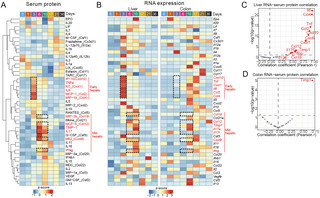
Localized infections can trigger systemic inflammatory responses, which are essential for limiting infection. However, if these systemic responses are prolonged, they can lead to tissue damage and disease. Understanding the timing of these immune reactions is crucial to balancing effective immunity with the risk of damage. A recent study investigated the liver's role in coordinating systemic immune responses to enteric infections, specifically using a mouse model of infectious colitis caused by Citrobacter rodentium. Researchers collected matched measurements of global gene expression profiles from both the liver and intestinal epithelium throughout the course of the infection and its clearance.
The findings revealed that during the peak of infection, there was metabolic suppression in the liver alongside a sustained immune signaling pattern in the colon, characterized by the infiltration of CD4 and CD8 T cells. Notably, an early inflammatory signal was detected in the liver that resolved before the peak of disease and pathogen colonization. This early signal was dependent on the pathogen's virulence and correlated with the timing of a systemic response, including the release of key mediators such as TNF-α and IL-6, which are involved in the acute-phase response.
The study underscores the liver's critical role as a central hub connecting the gut and systemic physiology. The researchers hypothesized that monitoring the kinetics of liver gene expression during an intestinal bacterial infection could provide valuable insights into the control of systemic immune tone. They identified an early burst of liver cytokine signaling that occurred and resolved before peak pathogen burden, suggesting that this early response is crucial for promoting immunity while preventing tissue damage.
The researchers utilized a model involving C. rodentium, which is relevant to human food-borne pathogens, to generate a comprehensive dataset that included pathogen burden and RNA abundance from both the liver and colonic epithelium. Their results indicated that the liver responds earlier to enteric infection than the colonic epithelium, with gene expression changes in the liver occurring as early as three days post-inoculation. This early response was characterized by transcripts associated with inflammatory responses, including IL-6 and TNFα.
In summary, this study provides significant insights into the temporal dynamics of hepatic gene expression in response to enteric infections, highlighting its role in coordinating systemic immune responses and limiting the duration of inflammation. The findings may have implications for understanding how to manage systemic inflammation in the context of gut infections and could inform future therapeutic strategies.