Concerns Raised Over RFK Jr. and JD Vance's All-Steak Diet and Its Health Implications
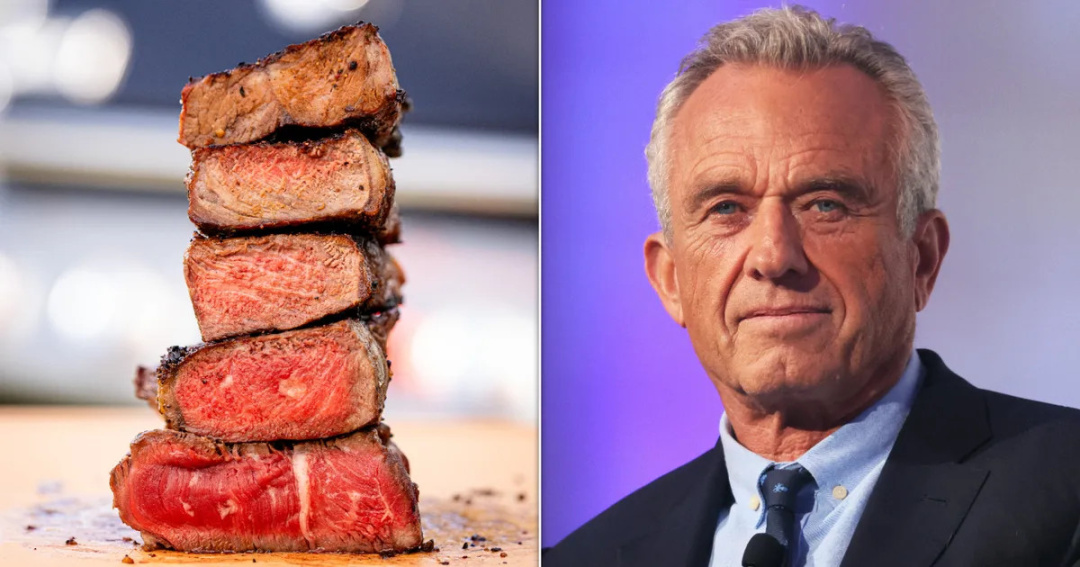
Health and Human Services Secretary Robert F. Kennedy Jr. has been vocal about his adherence to a diet consisting solely of steak and fermented foods. This diet, referred to as the "Living Diet," has also been adopted by notable figures such as JD Vance, Howard Lutnick, and Sean Duffy. According to a recent article in New York Times Magazine, these individuals consume only the flesh of grass-fed ruminants, including cows, bison, elk, and venison, alongside various fermented foods like sauerkraut. Dr. Sean O’Mara, who created this diet, claims that the inclusion of fermented foods aids in gut health and metabolism, potentially leading to weight loss. Notably, Kennedy has reportedly reduced his visceral fat by 40%, while Vance's weight loss has caught the attention of former President Donald Trump.
Dr. O’Mara emphasizes that the diet not only promotes weight management but also results in what he describes as "nearly orgasmic" bowel movements. He references the Bristol Stool Chart, indicating that his diet leads to healthy bowel movements, which he claims can occur without the need for toilet paper. However, this assertion has raised eyebrows among medical professionals. Dr. Saurabh Sethi, a gastroenterologist, cautions that such a low-fiber diet can lead to constipation, as fiber is essential for maintaining healthy bowel function. He notes that fiber adds bulk to stool and retains water, which is crucial for regularity.
Interestingly, some individuals on high-meat diets report the opposite effect, experiencing more frequent loose stools, which Dr. Sethi suggests may be linked to fat malabsorption rather than a sign of good health. He expresses concern that the diet's high meat content could pose risks for cardiovascular health and colon well-being, as the absence of plant-based foods deprives the gut of necessary fiber. This is particularly concerning given the World Health Organization's classification of unprocessed red meat as probably carcinogenic, particularly in relation to colorectal cancer.
While weight loss may occur on this diet, Dr. Sethi attributes it more to calorie restriction and the appetite-suppressing effects of high protein intake rather than any unique metabolic advantage of ruminant meat. He acknowledges the potential benefits of fermented foods for gut microbiome diversity but emphasizes that these benefits are independent of the meat-heavy framework of the diet. Overall, the restrictive nature of the diet raises significant questions about its long-term health implications and alignment with dietary guidelines that advocate for a balanced intake of various food groups.