Meal Timing Influences Circadian Rhythms in the Dorsal Vagal Complex
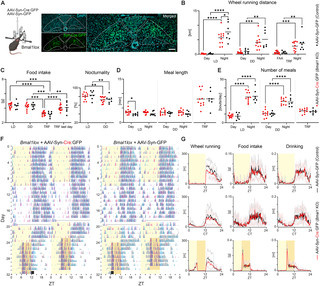
Recent research published in PLOS Biology has shed light on the intricate relationship between meal timing and circadian rhythms in the dorsal vagal complex (DVC), a key brainstem region implicated in regulating satiety and feeding behavior. The study, led by researchers from the University of Bristol, utilized PERIOD2::LUCIFERASE reporter mice to quantitatively assess the expression of core clock genes within the DVC, both in vivo and ex vivo. The findings demonstrated that the molecular clock within the DVC exhibits robust circadian rhythms that are entrained by the timing of food intake rather than by light-dark cycles.
The DVC has garnered attention for its role in the action of anti-obesity medications, making it a focal point for understanding metabolic health. This study builds on previous work that identified the DVC's circadian properties, revealing that its clock is sensitive to meal timing. The researchers found that rhythmic expression of neurotransmitter receptor genes in the DVC is tightly regulated by when food is consumed, suggesting that meal timing can significantly influence the DVC's function in satiety signaling.
The DVC is composed of several distinct structures, including the area postrema (AP) and the nucleus of the solitary tract (NTS), which together process metabolic and feeding-related cues. The study's authors noted that previous research had established the DVC's circadian timekeeping properties, but the specific factors influencing these rhythms were not fully understood until now.
By employing advanced techniques such as fluorescent in situ hybridization, the researchers were able to visualize the expression of core clock genes across different regions of the DVC. Their results indicated that the DVC's molecular clock not only regulates the timing of gene expression but also influences the duration of meals, particularly during the light phase of the daily cycle.
These findings have important implications for clinical studies targeting the DVC in obesity treatments. Understanding how meal timing affects the DVC's circadian rhythms could lead to more effective dietary strategies for managing weight and improving metabolic health. The study highlights the need for further research to explore the complex interplay between feeding schedules and circadian biology, particularly in the context of obesity and related metabolic disorders.