Study Identifies FDA-Approved Compounds to Inhibit Pseudomonas aeruginosa Toxin ExoU
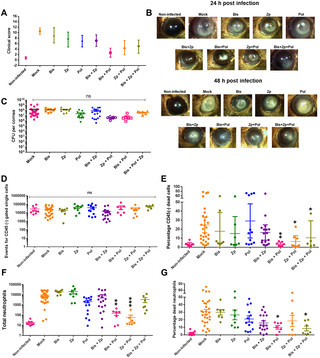
Pseudomonas aeruginosa is a significant cause of microbial keratitis, an eye infection that can lead to severe tissue damage and vision loss. A critical factor in the severity of this infection is the type III secretion system effector known as ExoU, which acts as a potent phospholipase, causing rapid destruction of host cells. Traditional treatment methods primarily focus on controlling bacterial growth through antimicrobial therapies, which do not address the damage caused by ExoU. In a recent study, researchers explored an antivirulence strategy aimed at inhibiting ExoU activity using a screening process of over 3,000 FDA-approved compounds. The study identified three promising inhibitors: zinc pyrithione (Zp), bismuth subcitrate (Bis), and polymyxin B (Pol). Each compound functions through distinct mechanisms; for instance, Zp disrupts ExoU's oligomerization, while Bis impairs its membrane association, and Pol directly inhibits its enzymatic activity. The combination of these compounds demonstrated enhanced efficacy, achieving significant inhibition of ExoU in vitro. Additionally, in models using mammalian cells, Bis and Pol facilitated the degradation of ExoU, further reducing its cytotoxic effects. The therapeutic potential of these inhibitors was tested in various models, including ex vivo porcine corneas and in vivo mouse keratitis models. Results showed that topical application of the ExoU inhibitors led to a marked reduction in corneal opacity and tissue damage, while maintaining bacterial load. This indicates that the inhibitors target the virulence factor without compromising the body's ability to manage the infection. The findings support the notion that repurposing existing FDA-approved drugs can provide a viable strategy for mitigating the effects of bacterial toxins in ocular and potentially other mucosal infections. This approach not only offers a new avenue for treatment but also highlights the importance of addressing virulence factors in infectious diseases, which could lead to improved patient outcomes in cases of microbial keratitis and beyond.














