Machine Learning Framework Developed for Assessing Pathogen Risks in Drinking Water
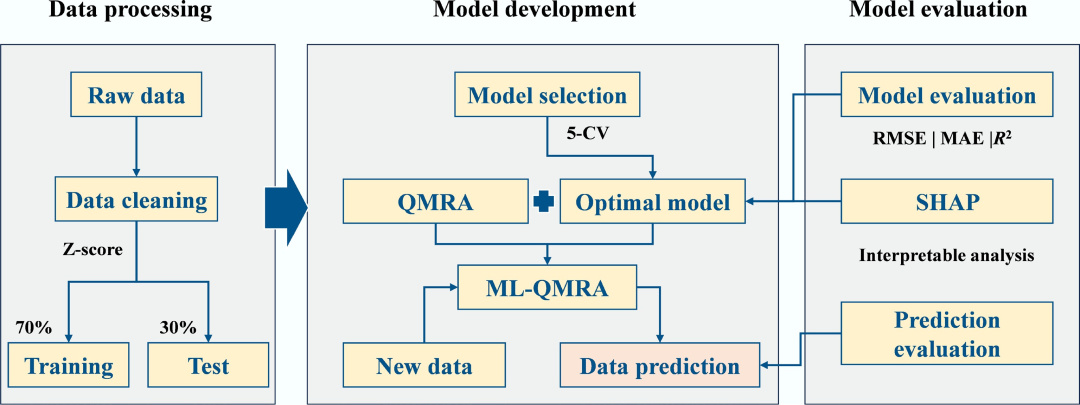
The emergence and re-emergence of pathogens present significant challenges to global public health. Waterborne pathogen contamination in water bodies is a major concern, with the World Health Organization estimating that around 2 billion people use drinking water sources contaminated with microbial pathogens, leading to approximately 485,000 deaths annually due to waterborne diseases. Traditionally, the microbiological quality of water has been assessed using fecal indicator bacteria (FIB) such as Escherichia coli, Enterococcus faecalis, and fecal coliforms. However, recent findings indicate that FIB concentrations do not always correlate well with the presence of specific pathogens, highlighting the need for direct pathogen detection and advanced risk assessment frameworks to comprehensively address microbial hazards. Common pathogens found in drinking water include bacteria like Pseudomonas aeruginosa, Salmonella spp., and Shigella spp., as well as viruses such as Adenovirus, Norovirus, and Enterovirus. These pathogens can cause serious illnesses, including typhoid fever and gastroenteritis, when they enter the human body through various routes. Traditional culture-based methods for detecting microorganisms typically require 24 to 72 hours for results, which can delay public health responses. In contrast, molecular techniques like quantitative polymerase chain reaction (qPCR) offer higher sensitivity and specificity but often require sophisticated equipment and trained personnel, limiting their use in low-resource settings. Recent advancements in machine learning (ML) have shown promise in modeling complex relationships between water quality parameters and microbial contamination. This study utilized six machine learning algorithms—Multiple Linear Regression, Least Squares Boosting, Decision Tree, Support Vector Machine, Random Forest, and Multilayer Perceptron—to develop predictive models based on water quality indicators. The optimal model was integrated with a quantitative microbial risk assessment (QMRA) framework to estimate health risks associated with pathogen exposure. The study involved collecting surface water samples from a major city in Eastern China over several months, analyzing contamination levels of three fecal indicator bacteria and six pathogens. The findings demonstrated significant variability in pathogen concentrations, indicating widespread contamination and the need for enhanced monitoring and risk assessment strategies. The developed ML-QMRA framework aims to provide a practical solution for assessing waterborne health risks in real-time, facilitating timely public health interventions. By integrating machine learning predictions with traditional risk assessment methods, the study offers a transparent and reliable approach to microbial water quality management, addressing a critical public health concern.