Centella asiatica Targets Neurodegenerative Diseases Through Network Pharmacology
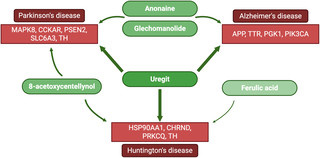
Neurodegenerative diseases, such as Alzheimer's disease (AD), Parkinson's disease (PD), and Huntington's disease (HD), pose significant challenges due to their progressive nature and limited treatment options. A recent study published in PLOS One investigated the potential of Centella asiatica (C. asiatica), a medicinal and edible plant, to exert neuroprotective effects against these disorders. The research employed an integrative approach that combined network pharmacology, transcriptomic analyses, and molecular docking to identify candidate compounds and their targets associated with these diseases.
The study identified sixteen constituents of C. asiatica that met specific criteria for drug-likeness, gastrointestinal absorption, and blood-brain barrier permeability. This analysis yielded 370 unique predicted targets linked to neurodegenerative diseases. Disease-gene mining revealed 983 genes associated with AD, 1,103 with PD, and 3,316 with HD. The integration of compound targets and disease-associated genes led to the prioritization of several hub genes relevant to these conditions, including CCKAR, MAPK8, and PSEN2 for PD, APP, PGK1, and TTR for AD, and CHRND, HSP90AA1, and PRKCQ for HD. Enrichment analyses underscored the involvement of neurotransmitter signaling, calcium pathways, and inflammatory regulation in these diseases.
The findings from this study are significant as they provide a foundation for future biochemical and cellular validation of C. asiatica's potential neuroprotective effects. The research highlights the importance of exploring plant-derived compounds as multi-target agents in the treatment of neurodegenerative diseases, particularly given the limitations of current therapies that primarily address symptoms rather than the underlying neurodegenerative processes. As the study concludes, further investigation is essential to validate these findings and explore the therapeutic potential of C. asiatica in clinical settings. The study's integrative computational analysis serves as a stepping stone for future research into the neuropharmacological properties of this promising plant.