Exploring the Interaction of Electrotaxis and Mechanotaxis in Cell Migration
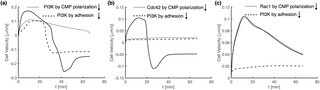
Understanding how cells migrate in response to external cues is crucial for various biological processes, including development, tissue repair, and disease progression. A recent study delves into the interplay between two significant types of signals: mechanical cues from the physical environment and electrical cues. While both signals have been extensively studied independently, their interaction in guiding cell migration has not been thoroughly explored until now. The researchers utilized established biophysical models to examine how mechanical and electrical signals cooperate or compete in directing cell movement. Their findings indicate that electrical signals can override mechanical guidance, and in some cases, even reverse the direction of cell migration. The outcomes of this interaction are highly dependent on the specific cell type and the parameters that define how sensing molecules activate the signaling pathways involved in cell movement. To facilitate future research in this area, the authors have developed an open-access platform that predicts how cells will migrate based on their unique sensing and signaling characteristics. This tool aims to aid in understanding how to tailor mechanical and electrical signals for applications in organ development, cancer invasion, and tissue regeneration. The study emphasizes the importance of considering multiple environmental signals simultaneously, as they often coexist in living systems. By integrating these insights, researchers hope to enhance the ability to control cell migration, which is vital for advancing therapeutic strategies in regenerative medicine and cancer treatment. The implications of this research extend beyond basic biology, as it may inform approaches to manipulate cell behavior in clinical settings, ultimately improving outcomes in tissue engineering and regenerative therapies.














