Study Reveals Viral Influence on Microbiome's Response to Catechin in Peatlands
Recent research conducted at Stordalen Mire in Sweden has uncovered significant insights into how catechin, a polyphenol found in various plants, can drastically reduce methane emissions in peat microcosms. The study demonstrated that catechin amendments could decrease methane emissions by over 80% by fostering the growth of catechin-degrading bacteria that outcompete methanogens for hydrogen. However, the role of viruses in this microbial landscape had not been previously explored. The researchers hypothesized that viral dynamics could influence the microbiome's response to nutrient amendments, potentially altering the physiological state of the microbes involved.
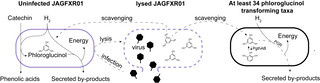
To investigate this, the team performed eco-genomics analyses on existing multi-omics data from their earlier studies. They identified approximately 900 putatively lytic viral operational taxonomic units (vOTUs), with a significant portion predicted to infect key catechin-degrading bacteria, including Clostridium species and an undescribed Bacillota genus. One particular vOTU was found to dominate the viral community response, suggesting that it induces intense lytic activity that could release catechin degradation intermediates to other microbes in the community.
Gene expression analyses indicated that the presence of these viruses correlates with increased signals for catechin-intermediate degradation and hydrogenase activity in numerous polyphenol-degrading metagenome-assembled genomes. This supports a model where viral lysis of catechin degraders redistributes phenolic intermediates to other hydrogen-consuming taxa, thereby maintaining methane suppression.
The implications of this research extend beyond just carbon cycling; they highlight the potential for viral interactions to influence microbiome engineering strategies aimed at mitigating methane emissions. Understanding these dynamics could lead to more effective interventions in various ecosystems, including soils and human health contexts. This study emphasizes the need for further exploration into the unintended consequences of nutrient amendments and the role of viruses in shaping microbial community responses to environmental changes.