Study Reveals Complex Effects of Antifilarial Drugs on Lymphatic Filariasis
Antifilarial drugs, including ivermectin, albendazole, and diethylcarbamazine, are essential components of mass drug administration (MDA) campaigns aimed at controlling lymphatic filariasis, a neglected tropical disease caused by parasitic nematodes. Despite their widespread use, the exact mechanisms by which these drugs exert their effects on the parasites remain poorly understood. This study delves into the complexities of how these drugs interact with different developmental stages of the parasites, revealing significant insights into their pharmacological actions and implications for disease management.
The research indicates that while these drugs effectively clear the circulating larval stage, known as microfilariae, they show limited activity against adult worms. This discrepancy complicates efforts to monitor and eliminate the disease, as adult parasites can persist even after treatment. The study employed high-content imaging and quantitative mass spectrometry to conduct a detailed phenotypic analysis of drug responses in both microfilariae and adult worms. The findings suggest that environmental factors, such as temperature and salinity, can influence the motility of microfilariae when exposed to ivermectin, indicating that drug efficacy may be affected by the physiological conditions present in the host.
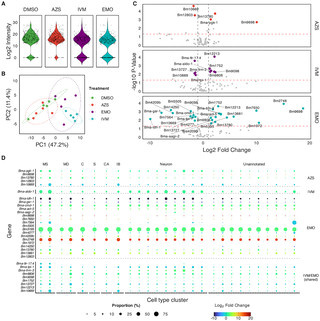
Moreover, the study highlights that the responses of adult worms to antifilarial drugs vary with their age and that different drugs induce distinct changes in the secretory proteome of the parasites. This deeper understanding of drug action at the intra-host level is crucial for improving current treatment strategies and enhancing surveillance methods for detecting surviving adult parasites post-treatment. The research underscores the importance of refining our knowledge of existing drug mechanisms to better inform elimination programs and address challenges such as drug resistance and adverse effects in co-endemic regions.
Overall, the study contributes valuable insights into the pharmacodynamics of antifilarial drugs, emphasizing the need for continued research to optimize treatment protocols and improve outcomes for individuals affected by lymphatic filariasis.














