Study Links Occupational Hearing Loss to Increased Cardiovascular Risk in Workers
A recent cross-sectional study investigated the association between occupational hearing loss and the predicted 10-year cardiovascular disease (CVD) risk among middle-aged industrial workers in Tehran, Iran. Conducted by researchers from the Occupational Medicine Research Center at Iran University of Medical Sciences, the study included 988 workers, predominantly male, with a mean age of 46.8 years. Participants underwent routine health examinations, including pure-tone audiometry to assess hearing loss and cardiovascular risk assessments using the WHO/ISH prediction chart.
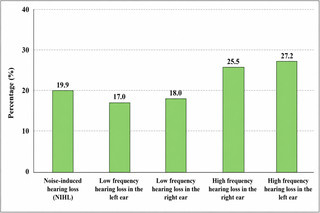
The study identified various hearing-loss phenotypes, including low-frequency hearing loss (LFHL), high-frequency hearing loss (HFHL), overall hearing loss (HL), and noise-induced hearing loss (NIHL). The prevalence of NIHL was found to be 19.9%, with HFHL observed in 27.2% of left ears and 25.5% of right ears. LFHL was present in 17.0% of left ears and 18.0% of right ears. The researchers utilized multivariable logistic regression models to analyze the relationship between demographic, occupational, and clinical factors and each hearing-loss phenotype, excluding the composite WHO/ISH CVD-risk score to avoid conceptual overlap.
Key findings indicated that sex and age were significant independent factors associated with hearing loss. Specifically, female workers exhibited lower odds of LFHL, HFHL, overall HL, and NIHL compared to their male counterparts. Additionally, older age correlated with increased odds of LFHL, HFHL, and overall HL. Smoking was linked to HFHL and NIHL, while work experience was associated with NIHL. However, job type and diabetes did not consistently predict hearing loss in the adjusted models.
The study underscores the importance of understanding how demographic, behavioral, and occupational factors contribute to hearing loss among industrial workers. While the predicted 10-year CVD risk was assessed, the composite WHO/ISH risk score was not included in the multivariable models to maintain clarity in the analysis. The authors advocate for hearing conservation programs that incorporate noise control measures, regular audiometric screenings, smoking cessation initiatives, and cardiovascular risk assessments as part of a comprehensive occupational health strategy.
This research highlights a critical intersection between occupational health and cardiovascular risk, suggesting that addressing hearing loss in industrial settings could have broader implications for worker health. The findings call for further investigation into the relationship between occupational hearing loss and cardiovascular health, particularly in middle-income regions where such studies are limited. By enhancing occupational health policies and preventive strategies, it may be possible to mitigate the risks associated with both hearing loss and cardiovascular disease in the workforce.