The Nutritional Benefits of Adding Ghee to Rice in Indian Cuisine
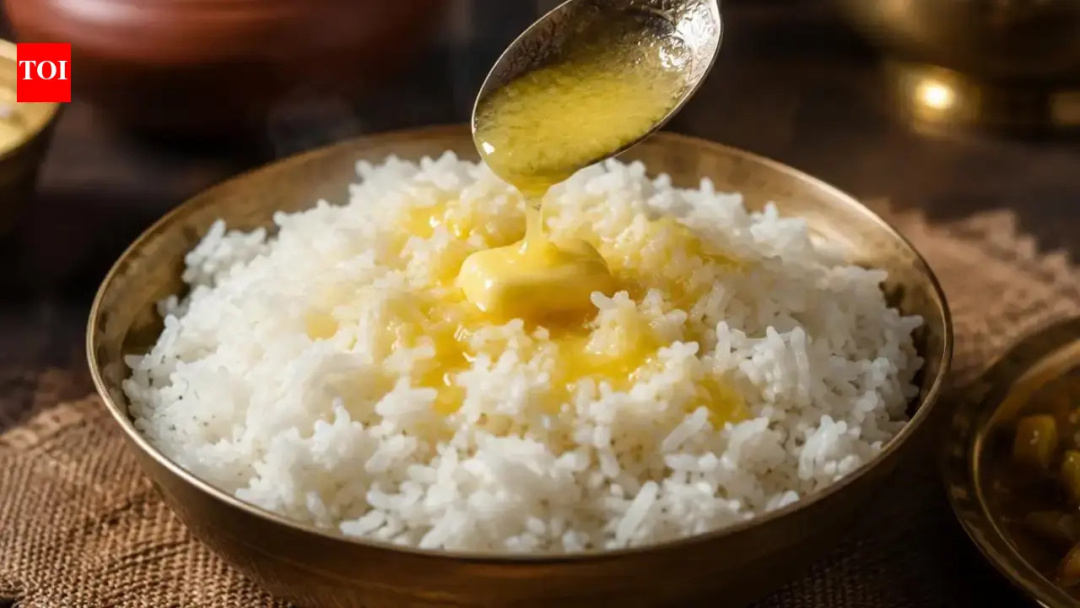
The comforting tradition of adding ghee to hot rice is a culinary practice cherished across India. From the South Indian dish ney chor to the North Indian staple of dal-chawal, this pairing has been passed down through generations. Recent research indicates that this age-old custom may offer more than just flavor. Scientific findings suggest that incorporating a small amount of ghee into hot rice can support digestion, enhance nutrient absorption, influence blood sugar response, and even promote gut health when consumed as part of a balanced diet.
White rice, while a rich source of carbohydrates, has a high glycemic index, which can lead to rapid spikes in blood sugar levels. However, when fat is added to a carbohydrate-rich meal, it can slow gastric emptying, allowing glucose to enter the bloodstream more gradually. A study published on ResearchGate involved 103 participants with type 2 diabetes who consumed white rice cooked with ghee over three months. The results showed that 86.41% of participants experienced a decrease in HbA1c levels, indicating improved blood sugar control, while only 13.59% saw an increase. The researchers concluded that this method of preparing rice with ghee did not raise blood sugar levels in the participants, suggesting that it may help create a steadier release of energy compared to plain rice.
Although ghee is high in saturated fat, it contains beneficial short-chain and medium-chain fatty acids, including butyric acid, which is known to be a preferred fuel for the cells lining the colon. A review published in the National Library of Medicine highlights several potential health benefits of ghee, including its effects on cardiovascular health, wound healing, and skin health. While further research is necessary to fully understand ghee's therapeutic potential, it is clear that when consumed appropriately as part of a balanced diet, ghee can contribute positively to health.
Moreover, many vitamins and beneficial plant compounds are fat-soluble, meaning they are absorbed more effectively when consumed with dietary fat. For instance, pairing rice with vegetables like carrots, spinach, or leafy greens and adding a teaspoon of ghee can enhance the absorption of essential nutrients such as vitamins A, E, and K, as well as carotenoids. A study reviewed by Yao et al. (2022) found that dietary fats improve carotenoid bioavailability, suggesting that ghee can aid in the absorption of these vital nutrients from vegetables. This aligns with the traditional Indian thali, where rice, vegetables, and ghee are served together, promoting better nutrient utilization.
The enduring popularity of ghee can also be attributed to its rich aroma, which enhances meal satisfaction. Food scientists have identified that flavor and aroma play significant roles in meal enjoyment, potentially leading to more mindful eating habits. While individual experiences may vary, sensory satisfaction is increasingly recognized as an important aspect of healthy eating behavior.
In Ayurveda, ghee has long been regarded as a food that supports agni, or digestive fire, while nourishing the body's tissues. Although Ayurvedic principles differ from modern nutritional science, it is noteworthy that many traditional observations regarding digestion and nutrient absorption are now being validated through scientific research. According to the study "Health benefits of ghee: Review of Ayurveda and modern science perspectives," ghee is associated with cognitive health, gut health, and overall nourishment.
Despite its potential benefits, ghee is calorie-dense, providing about 45 calories per teaspoon. Health organizations, including the World Health Organization and the American Heart Association, recommend limiting saturated fat intake as part of a heart-healthy diet. For most healthy adults, incorporating one to two teaspoons of ghee into a balanced meal can be reasonable, especially when paired with a diet rich in vegetables, whole grains, and regular physical activity. The simple act of adding ghee to hot rice serves as a reminder that traditional foods often possess practical nutritional logic. While ghee is not a superfood or a cure-all, it may help slow carbohydrate absorption, support the absorption of fat-soluble nutrients, and enhance meal satisfaction. Ultimately, the true benefit lies in enjoying ghee as part of a wholesome, balanced meal.