Innovative Biomaterials Use Cellular Forces to Enhance Tissue Repair
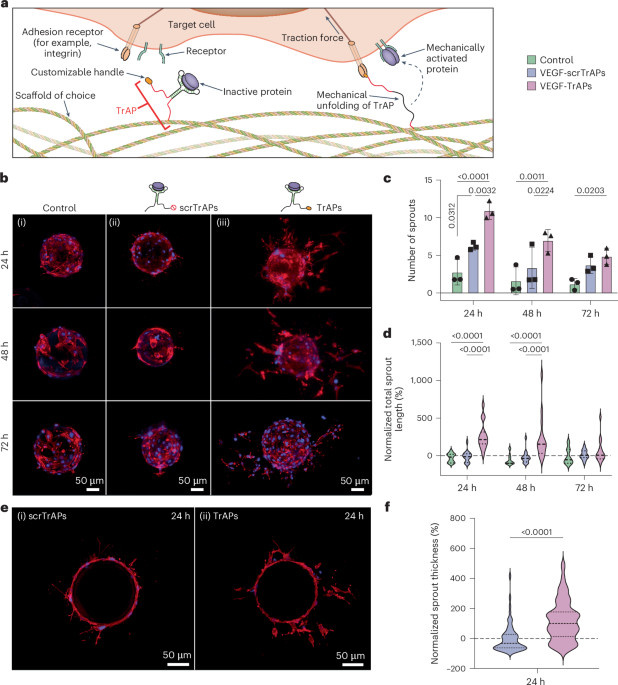
A groundbreaking study reveals that biomaterials designed to respond to cellular traction forces can significantly enhance tissue repair by delivering endogenous growth factors. This innovative approach contrasts with conventional drug delivery systems that often require high doses of recombinant proteins and external triggers. The research demonstrates how bioinspired aptamer constructs, which are attached to biomaterial scaffolds, can selectively harvest and activate growth factors from cells and injury sites in vivo and ex vivo, at doses much lower than current clinical standards. This method not only promises to improve the efficacy of wound healing but also aims to reduce the risks associated with traditional therapies, such as uncontrolled tumor growth or adverse side effects from excessive growth factor administration.
The study emphasizes the urgent need for effective solutions for patients suffering from chronic wounds, which can lead to severe complications and decreased quality of life. By utilizing cellular traction forces as a natural trigger for growth factor release, the researchers have created a system that can operate in the complex and enzyme-rich environments typical of healing tissues. This mechanism allows the biomaterials to hold growth factors in an inactive state until they are needed, thus preventing background signaling that can complicate healing processes.
In animal models, the traction-force-activated payloads (TrAPs) were shown to promote angiogenesis and tissue repair effectively. The study found that these biomaterials could significantly increase the number and size of blood vessels in healing tissues, demonstrating their potential to modulate vascularization in both skin and bone. The findings suggest that this technology could lead to more accessible and cost-effective treatments for difficult-to-heal wounds, ultimately improving patient outcomes and reducing healthcare burdens.
While the results are promising, further research is necessary to fully understand the long-term implications of using such biomaterials in clinical settings. The study opens up exciting avenues for future exploration in the field of regenerative medicine, particularly in how we can leverage the body's natural healing processes to enhance recovery and repair.














