Study Reveals Aerobic Exercise Reshapes Heart's Nerve Network
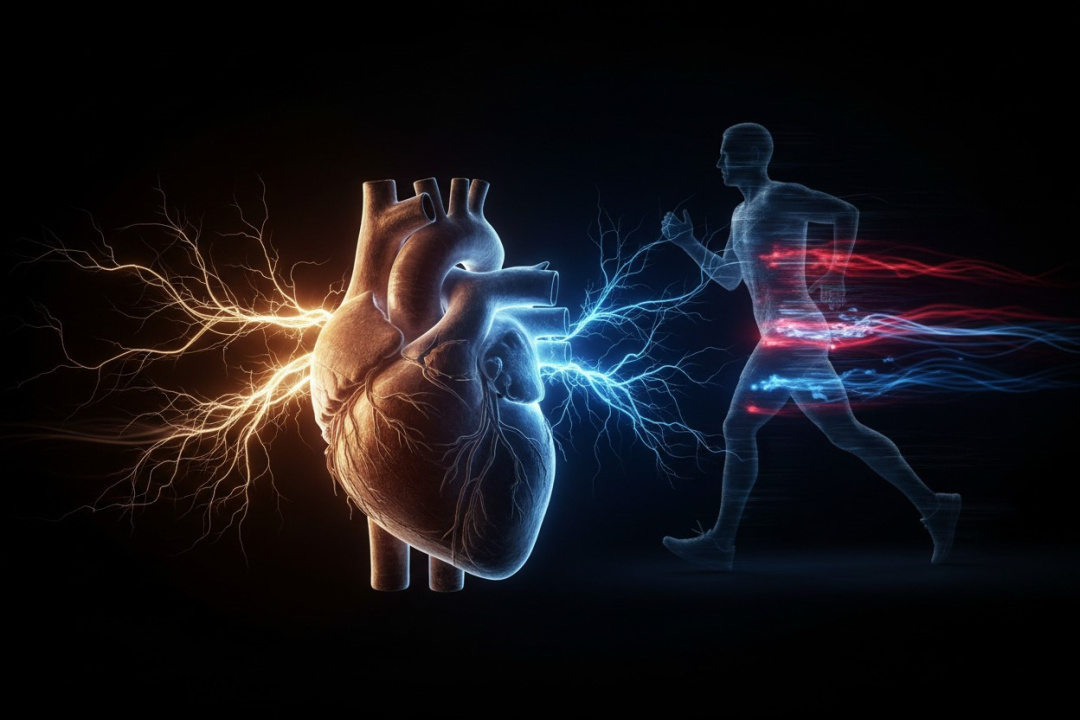
A study conducted by researchers at the University of Bristol has found that regular aerobic exercise reshapes the nerves that control the heart. Published in the journal Autonomic Neuroscience, the research reveals that after a 10-week training regimen, rats exhibited significant changes in the stellate ganglia, nerve clusters located in the neck and upper chest that send signals to the heart. The lead author, Dr. Augusto Coppi, a Senior Lecturer in Veterinary Anatomy, noted that this discovery uncovers a previously hidden left-right pattern in the body’s autonomic control of the heart. This finding could lead to more tailored treatments for conditions such as arrhythmias and angina, as well as stress-induced "broken-heart" syndrome. The study utilized advanced imaging techniques to analyze changes in the nerve clusters after exercise. Results showed that trained rats had approximately four times as many neurons in the right stellate ganglion compared to the left, while the neurons on the left nearly doubled in size, and those on the right became slightly smaller. Dr. Coppi described these nerve clusters as functioning like a "dimmer switch" for the heart, indicating that exercise remodels this control mechanism in a side-specific manner. The asymmetric changes observed suggest that aerobic training induces a novel form of neuroplasticity within the autonomic nervous system. The implications of these findings are significant, as they could enhance the precision of treatments for heart rhythm disorders and angina by targeting the stellate ganglia more effectively. However, the research is still in its early stages, having been conducted in rats, and further clinical trials will be necessary to assess the applicability of these findings in humans. Future research will aim to explore how these structural changes impact heart performance during various activities and at rest, using non-invasive markers in human subjects. Dr. Coppi emphasized the potential for personalized treatments based on the left-right differences identified in the study, which may also be observed in other animal models and eventually in human patients. This study is the first to provide evidence that aerobic exercise can induce asymmetric neuroplasticity in the stellate ganglia, a critical component of the autonomic nervous system responsible for regulating circulation, respiration, and metabolism. The research was supported by multiple institutions, including University College London and the Federal University of São Paulo in Brazil, and is a significant step forward in understanding how exercise can influence heart health at a neural level.