Dietary Influences on Hair Health and Growth: Key Nutrients Identified
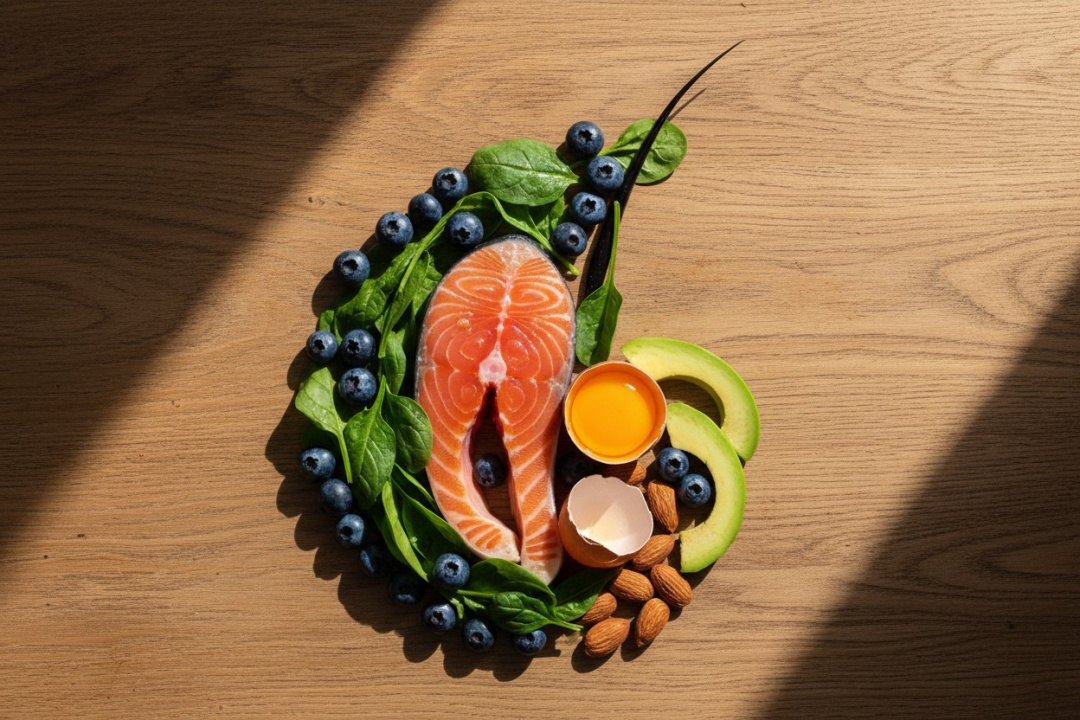
An article published on July 13, 2026, on mindbodygreen by Alexandra Engler discusses the essential nutrients required for hair health, noting that hair is among the fastest-growing tissues in the body. It emphasizes the need for a consistent supply of various nutrients to build strong hair strands, support healthy follicles, and maintain the hair growth cycle. The article asserts that no single food can provide all necessary support; instead, a balanced dietary pattern is crucial for optimal hair strength and follicle health.
Diet plays a significant role in hair vitality. Ava Grace, writing for NaturalNews.com, points out that deficiencies in essential vitamins and minerals can lead to issues such as thinning, brittleness, and hair loss. Nicky Hambleton-Jones, in her book "The 10 Years Younger Nutrition Bible," adds that extreme dieting and poor nutrition can also contribute to hair thinning. The mindbodygreen article stresses that overall dietary patterns are vital in creating a supportive environment for hair follicles.
The composition of hair is primarily keratin, a protein made from amino acids. Insufficient dietary protein can lead to increased hair shedding, slower growth, and thinner strands. The report indicates that animal proteins naturally provide all essential amino acids, while a well-planned plant-based diet can also support hair health through adequate variety and intake.
La Fonceur, in "Secret of Healthy Hair Extract Part 2," lists protein as one of the ten most important nutrients for hair health. The Neals Yard Remedies beauty book highlights that B vitamins, zinc, silica, protein, and copper are crucial micronutrients for preventing hair loss. Additionally, protein powders and collagen supplements may offer specific amino acids beneficial for hair, skin, and nails, as referenced in the report.
Iron deficiency is noted as one of the most common nutritional causes of hair shedding, particularly among women, since iron is essential for transporting oxygen to hair follicles. Vitamin C is mentioned as a nutrient that enhances the absorption of plant-based iron and supports collagen production, both of which are vital for maintaining healthy hair.
The article also mentions that healthy hair depends on the scalp environment, with plant-derived ceramides potentially improving scalp hydration and supporting fuller-looking hair while reducing breakage. Emerging research is connecting dietary ceramides with enhanced hair fullness and scalp health, although specific study citations are not provided.
Biotin, recognized as vitamin B7, is highlighted for its role in cellular energy and nervous system support, which is crucial for hair health. The Hair Food Book by Kimalee Jones lists various herbs traditionally used to promote scalp and hair health, including moringa, amla, and bhringraj.
Vitamin D, classified as a hormone, is frequently found at lower levels in individuals experiencing certain types of hair loss. The article cites a 2018 study indicating that 41% of U.S. adults are insufficient in vitamin D, with approximately 29% being deficient.
A review of over a decade of nutritional science research, reported on Mercola.com, suggests that many American diets lack certain vitamins and minerals believed to contribute to longevity, including vitamins A, C, D, E, and K. Mike Adams, in an interview, emphasizes the importance of vitamin D in metabolism and recommends blood testing to assess levels. The article notes that supplementation is often the most effective method to increase vitamin D levels, although it advises testing before starting any supplementation.
The article concludes by reiterating that overall dietary patterns, including adequate caloric intake, protein, produce, and correction of nutrient deficiencies, are essential for follicle health. It highlights that during periods of nutrient shortages, illness, or chronic stress, the body may deprioritize hair health, leading to adverse effects on hair growth and vitality.