HLA-DRB1 and HLA-DQB1 Polymorphisms Linked to Coronary Atherosclerosis Risk
Atherosclerosis (AS) is a chronic inflammatory condition characterized by lipid accumulation and plaque formation in arterial walls, significantly contributing to cardiovascular diseases globally. In Northeast China, the prevalence of coronary atherosclerosis has been rising, prompting investigations into the genetic factors that may influence susceptibility to this condition. A recent case-control study involving 209 participants aimed to explore the contribution of specific human leukocyte antigen (HLA) class II polymorphisms, particularly HLA-DRB1 and HLA-DQB1, to AS risk in this population.
The study enrolled 135 patients diagnosed with coronary atherosclerosis and 74 healthy controls, focusing on the distribution of HLA-DRB1 and HLA-DQB1 alleles. The researchers found that the allele DRB1*07:01 was present in 12.59% of the AS-susceptible group, compared to 6.76% in the control group. Similarly, the allele DQB1*02:02 was found in 12.22% of the AS group versus 7.43% in controls. Although these differences did not reach statistical significance after correction for multiple comparisons, the upward trends suggest a potential association that warrants further investigation.
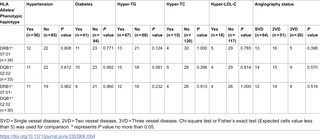
The study also identified the phenotypic haplotype DRB1*07:01-DQB1*02:02 as being more frequent in the AS-susceptible group (22.22% vs. 10.81% in controls), with an odds ratio of 2.357, indicating a possible link to increased risk for coronary atherosclerosis. However, the authors caution that these findings should be interpreted with care, as they did not survive statistical correction, highlighting the need for larger studies to confirm these associations.
The significance of this research lies in its potential to contribute to the understanding of genetic factors in coronary atherosclerosis, which could lead to improved early detection and personalized prevention strategies. The study was conducted under ethical approval, and all participants provided informed consent, ensuring adherence to research standards. As the prevalence of atherosclerosis continues to rise, understanding its underlying genetic components may offer new avenues for intervention and management in affected populations.