Research Links Hematologic Biomarkers to Endocrine Toxicity in Lung Cancer Immunotherapy
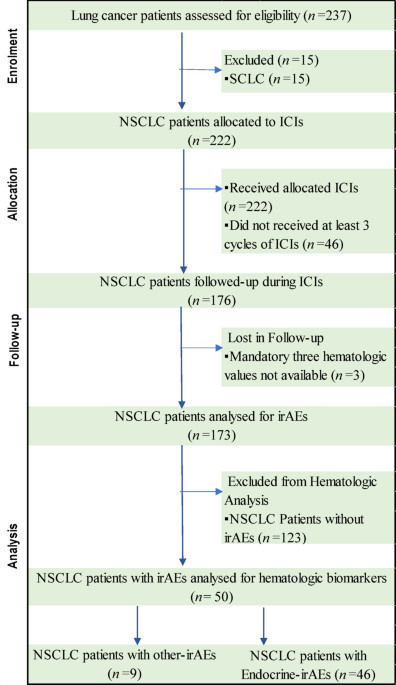
Recent advancements in lung cancer treatment have been significantly influenced by immune checkpoint inhibitors (ICIs), which have improved progression-free survival (PFS) and overall survival (OS) for patients. However, these therapies are also associated with immune-related adverse events (irAEs), prompting extensive research into biomarkers that could predict their occurrence. A retrospective cohort study conducted in Romania evaluated 173 patients with non-small cell lung cancer (NSCLC) who received at least three cycles of ICIs between November 2017 and August 2024. The study specifically investigated the association between endocrine irAEs and various hematologic variables, including the neutrophil-to-lymphocyte ratio (NLR), absolute neutrophil count (ANC), lymphocyte count, and eosinophil count. The findings revealed a statistically significant association between the NLR before the initiation of ICIs and the occurrence of all irAEs (odds ratio 0.877, 95% confidence interval 0.763–0.979, p = 0.036), though the connection to endocrine irAEs was not statistically significant (odds ratio 0.898, 95% confidence interval 0.781–1.031, p = 0.081). This suggests that while NLR may serve as a useful predictive tool in clinical settings, further research is needed to validate its effectiveness specifically for endocrine irAEs. The study highlights the complexities involved in identifying patients at risk for developing irAEs, emphasizing the need for reliable and clinically relevant biomarkers. The research also underscores the dynamic nature of hematologic biomarkers during immunotherapy, as various factors, including co-medications and the patients' clinical status, can influence these values. The study's findings contribute to the growing body of literature on predictive biomarkers in cancer treatment, indicating that while significant progress has been made, challenges remain in establishing clear and actionable guidelines for clinical practice. As the landscape of NSCLC treatment continues to evolve, understanding the predictive value of hematologic biomarkers will be crucial for improving patient outcomes and minimizing adverse effects during immunotherapy.














