Study Links Adverse Pregnancy Outcomes to Increased Risk of Peripheral Artery Disease
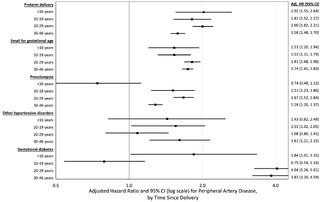
A large cohort study conducted in Sweden has revealed that women who experience adverse pregnancy outcomes are at a significantly increased risk of developing peripheral artery disease (PAD) later in life. The research, which analyzed data from 2,201,446 women who had singleton deliveries between 1973 and 2015, aimed to understand the long-term implications of five major adverse pregnancy outcomes: preterm delivery, small for gestational age, preeclampsia, other hypertensive disorders, and gestational diabetes. The study followed participants for up to 46 years, identifying diagnoses of PAD through national health registries. The findings indicate that all five adverse pregnancy outcomes were linked to a higher risk of PAD, with gestational diabetes presenting the highest hazard ratio of 3.83. Other outcomes also showed significant associations, with small for gestational age linked to a 1.74 times higher risk and preeclampsia associated with a 1.28 times increased risk. These results suggest that women with multiple adverse pregnancy outcomes face even greater risks. The study's authors emphasize the importance of early risk stratification and clinical follow-up for these women to mitigate their long-term cardiovascular risks. However, the study is limited to a Swedish population and relies on diagnostic codes, which may involve some misclassification of PAD cases. Further research is necessary to replicate these findings in different populations and to better understand the underlying mechanisms linking adverse pregnancy outcomes to PAD. The study was published in PLOS Medicine and underscores the critical need for awareness and preventive measures in women's health following adverse pregnancy experiences.