Linking Cognitive Function, Depression, and Physical Activity in Older Adults
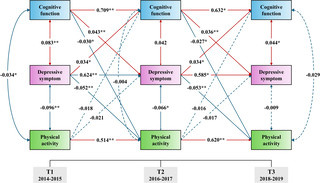
A recent longitudinal study examined the intricate relationship between cognitive function (CF) and depressive symptoms among older adults, focusing on the mediating role of physical activity (PA). Previous research has established that physical activity can enhance cognitive function and alleviate depressive symptoms, but the temporal dynamics and mechanisms linking these factors remain underexplored. This study utilized data from the English Longitudinal Study of Aging (ELSA), which included 6,787 participants aged 50 and older, to investigate how these elements interact over time.
The researchers employed a Cross-Lagged Panel Model (CLPM) to analyze the causal relationships among CF, depressive symptoms, and PA across three assessment waves from 2014 to 2019. Findings revealed a significant correlation between CF and depressive symptoms, indicating that poorer cognitive function predicted more severe depressive symptoms in subsequent years, and vice versa. Specifically, the analysis showed that lower cognitive function at baseline was associated with increased depressive symptoms at follow-ups, suggesting a negative feedback loop between these two factors.
Moreover, the study highlighted that physical activity serves as a crucial mediator in this relationship. Participants with better cognitive function were more likely to engage in physical activity, which in turn was linked to lower levels of depressive symptoms. The results indicated that while cognitive impairment can lead to reduced physical activity, engaging in regular physical activity may help mitigate depressive symptoms and support cognitive health. However, the study also found that depressive symptoms did not significantly improve cognitive function over time, underscoring the complexity of these interactions.
The implications of this research are significant, particularly in light of the aging global population and the increasing prevalence of cognitive impairment and depression among older adults. Understanding the role of physical activity in maintaining cognitive and mental health could inform public health strategies aimed at promoting active lifestyles among the elderly. This study contributes to the growing body of evidence supporting the importance of physical activity as a potential intervention for enhancing cognitive function and reducing depressive symptoms in older adults.