Evaluating the Diagnostic Accuracy of Albumin-Adjusted Calcium in ICU Settings
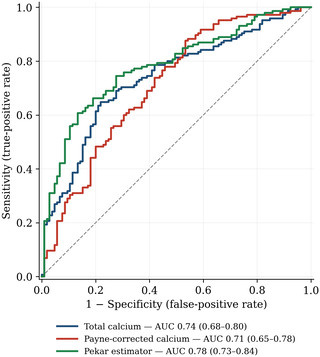
A study published in PLoS One evaluated the diagnostic performance of albumin-adjusted calcium in critically ill adults, particularly in intensive care units (ICUs). Despite its widespread use, the accuracy of albumin-adjusted calcium remains uncertain. The researchers aimed to compare the diagnostic capabilities of total calcium and several albumin-correction formulas against ionised calcium, which is considered the physiological reference standard for measuring calcium levels. In this prospective observational cohort study, 250 patients were enrolled, with a median age of 70 years. The study found that hypocalcaemia, defined as ionised calcium levels below 1.12 mmol/L, was prevalent in 58% of the participants. The Payne-corrected calcium formula identified only 15.2% of those truly hypocalcaemic, while total calcium correctly identified 62.8%. The study also assessed various correction formulas and found that none significantly outperformed unadjusted total calcium. The only formula that showed a higher diagnostic accuracy was the Pekar estimator, which incorporates additional variables beyond simple albumin adjustment. The findings suggest that albumin-corrected calcium formulas do not provide a diagnostic advantage over total calcium in ICU settings and may often obscure true hypocalcaemia. Therefore, the study advocates for prioritizing direct ionised calcium measurement in clinical practice when accurate calcium status is critical for patient management. The implications of these findings for clinical outcomes warrant further investigation, as the study emphasizes the need for careful consideration in the interpretation of calcium status in critically ill patients.