Quercetin Inhibits Viral Proliferation by Disrupting Ubiquitin Transfer Mechanism
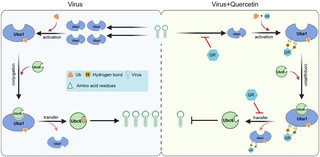
Quercetin, a naturally occurring flavonoid found in various plants, has garnered attention for its diverse biological activities, including its antiviral properties. A recent study published in PLOS Pathogens investigates the mechanism through which quercetin inhibits the proliferation of two significant viruses: the Bombyx mori nucleopolyhedrovirus (BmNPV), a double-stranded DNA virus, and the porcine reproductive and respiratory syndrome virus (PRRSV), a single-stranded RNA virus. The researchers discovered that quercetin exerts its antiviral effects by targeting the host's ubiquitin-activating enzyme 1 (Uba1) homologs. This interaction disrupts the ubiquitin transfer process, which is crucial for viral replication. Specifically, quercetin binds to Uba1 homologs with high affinity, and mutations in key residues of Uba1 significantly impair this binding, leading to a loss of quercetin's antiviral activity. The study utilized surface plasmon resonance (SPR) to demonstrate that Uba1 knockdown enhances the antiviral effect of quercetin, while overexpression of Uba1 has the opposite effect. These findings indicate that quercetin not only inhibits viral replication but also highlights the importance of the ubiquitin-proteasome system in virus-host interactions. The conserved mechanism across different species suggests that quercetin may serve as a promising candidate for developing antiviral agents against a variety of viral infections. The implications of this research extend to the potential for quercetin to be used in therapeutic applications, particularly in combating viral diseases that pose significant health risks to both humans and livestock. The study underscores the need for further exploration into quercetin's pharmacological properties and its role in viral infections, paving the way for future antiviral strategies that could alleviate the burden of viral diseases.