Impact of Sleep-Disordered Breathing on Fetal Development and Neuronal Injury Biomarkers
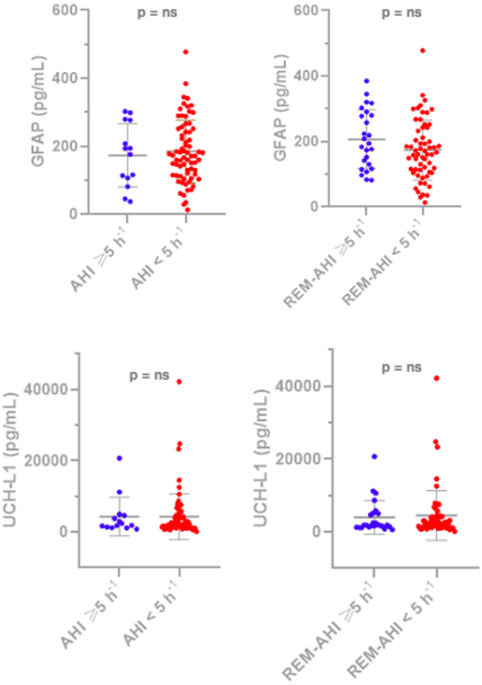
Sleep-disordered breathing (SDB) during pregnancy poses risks to fetal development and brain maturation. This study measured the concentrations of two biomarkers, Ubiquitin C-terminal hydrolase-L1 (UCH-L1) and glial fibrillary acidic protein (GFAP), in umbilical cord blood from 85 neonates born to women who underwent polysomnography in their third trimester. The apnea-hypopnea index (AHI) and mean nocturnal oxygen saturation (mSaO2) were assessed to categorize the severity of SDB. The findings indicated no significant differences in UCH-L1 or GFAP levels among various SDB phenotypes compared to controls. However, elevated UCH-L1 levels were associated with shorter apnea-hypopnea events, suggesting a link between maternal SDB and fetal cellular stress. While maternal SDB did not broadly correlate with differences in these biomarkers, the study emphasizes the importance of monitoring SDB during pregnancy due to its potential impact on fetal neurodevelopment.
SDB encompasses conditions that affect ventilation and oxygenation during sleep, including obstructive sleep apnea (OSA) and rapid eye movement OSA (REM-OSA). Pregnancy can exacerbate these conditions due to physiological changes, increasing the risk of complications such as intrauterine growth restriction and neonatal morbidity. The third trimester is particularly critical for fetal brain development, and disruptions during this period may increase the risk of neuropsychiatric disorders later in life. Despite the established prevalence of SDB among pregnant women and its association with adverse outcomes, the mechanisms remain unclear.
The study found that while UCH-L1 and GFAP levels did not significantly differ based on maternal SDB, UCH-L1 levels were notably higher in neonates whose mothers experienced shorter apnea-hypopnea durations. This suggests that the length of apnea events may be a specific trigger for fetal cellular stress. The research underscores the need for longitudinal studies to fully understand the implications of SDB during pregnancy on fetal development and the potential for early identification of at-risk pregnancies.
In conclusion, while the findings indicate that maternal SDB may not universally induce detectable neuronal stress in the fetus, the correlation between UCH-L1 levels and apnea length highlights the complexity of this condition and its potential consequences for fetal health. Early detection and management of SDB in pregnant women are crucial for mitigating risks to fetal neurodevelopment.