Neuropeptides Identified as Targets for Regulating Feeding in Eurygaster integriceps
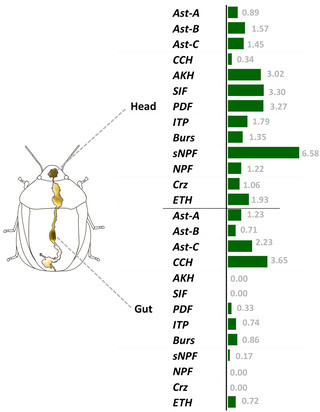
A study published in PLOS One investigates the role of neuropeptides in regulating feeding behavior and development in the Sunn pest, Eurygaster integriceps, a significant agricultural pest affecting wheat and barley crops in West and Central Asia and Eastern Europe. This pest causes substantial economic losses, with infestations leading to yield reductions of up to 90% in wheat and 30% in barley, severely impacting food security. The research focuses on 13 feeding-related neuropeptides identified through RNA sequencing, characterizing their precursor structures and expression patterns across different developmental stages and sexes. The findings reveal that several neuropeptides exhibit higher expression levels in males compared to females, indicating sexually dimorphic regulation of feeding and metabolism. Additionally, most neuropeptides were found to be more highly expressed in the head than in the gut, aligning with their central neuro-regulatory functions. The study provides a comprehensive molecular atlas of these neuropeptides, offering foundational insights for developing environmentally safe pest control strategies. Current management practices for E. integriceps include chemical and biological methods, but these approaches face challenges such as environmental concerns and a lack of detailed molecular understanding of the pest's biology. The identification of neuropeptides as potential targets for pest control represents a promising avenue for creating species-specific insecticides that minimize environmental impact. This research underscores the importance of molecular-level studies in advancing pest management strategies and highlights the need for innovative approaches to address agricultural challenges.














