Study Examines Genetic Variants Impacting Processing Speed in Cognitive Aging
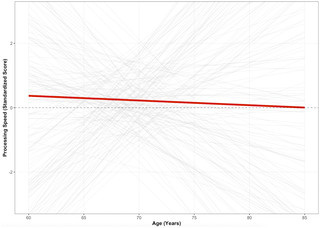
As the global population ages, understanding the mechanisms behind cognitive aging has become increasingly important for public health. A recent study published in PLOS One explored the relationship between common dopaminergic genetic variants and processing speed decline over a 12-year period. Processing speed is a critical cognitive function that tends to decline with age and is a strong predictor of dementia risk. The study involved 1,539 participants from The University of Manchester Longitudinal Study of Cognition in Normal Healthy Old Age, focusing on 89 independent genetic variants across nine dopamine pathway genes, including TH, DDC, DRD1-3, SLC6A3, COMT, DBH, and PPP1R1B. The researchers aimed to determine whether these genetic variants could explain individual differences in processing speed decline and performance at age 70, as well as other cognitive domains. Despite the established links between dopamine system integrity and cognitive performance, the findings revealed no significant associations after correcting for multiple testing. The strongest nominal signals were observed for the DRD2 gene variant rs10789943 and the DBH gene variant rs2005663, but these did not survive rigorous statistical scrutiny. This study underscores the complexity of cognitive aging, as individual differences in processing speed decline may be influenced by factors beyond common genetic variations, such as rare variants, epigenetic factors, or environmental interactions. The research highlights the need for further investigation into the biological mechanisms underlying cognitive aging and the role of genetics in this process. The study's findings contribute to the growing body of literature on cognitive aging, emphasizing the importance of longitudinal research to capture the nuances of cognitive decline.