Indole-3-Acetic Acid's Role in Virulence and Plant Adaptation by Dickeya dadantii
Indole-3-acetic acid (IAA) is a well-known plant hormone that plays a significant role in regulating plant growth and development. Recent research has uncovered its importance not only in plants but also in the interactions between plants and their associated bacteria, particularly in the context of plant pathogens. This study focuses on Dickeya dadantii, a globally significant bacterial pathogen responsible for soft rot disease in various crops, including potatoes and carrots. The researchers investigated how IAA influences the behavior of D. dadantii, particularly its virulence and ability to adapt to plant environments.
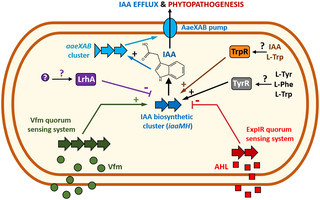
The findings indicate that when D. dadantii is deficient in IAA production, its ability to infect plants diminishes significantly. The absence of IAA leads to changes in gene expression that affect critical traits necessary for the bacterium's survival and disease development. For instance, the study identified that IAA regulates the expression of an efflux pump responsible for IAA secretion, which in turn helps the bacterium resist plant defense mechanisms. This efflux pump is vital for the bacterium's virulence, as it allows D. dadantii to thrive in the presence of plant defense-related phytohormones.
Phylogenetic analyses revealed that the genes encoding this efflux pump are commonly found among other plant-associated bacteria, suggesting a broader relevance of IAA in bacterial adaptation to plant hosts. Furthermore, the research uncovered a complex regulatory network that controls IAA production in D. dadantii, involving multiple quorum-sensing systems and transcriptional regulators.
The implications of this research are significant for understanding plant-pathogen interactions and developing new strategies for managing plant diseases. By targeting IAA biosynthesis and the activity of the efflux pump, it may be possible to create effective anti-virulence strategies against D. dadantii and potentially other plant pathogens. This study not only sheds light on the mechanisms of bacterial virulence but also emphasizes the intricate chemical communication that occurs between plants and their microbial associates, highlighting the importance of IAA as a key signaling molecule in these interactions.














