Yale Study Reveals Tuna Evolution Unrelated to Dinosaur Extinction Event
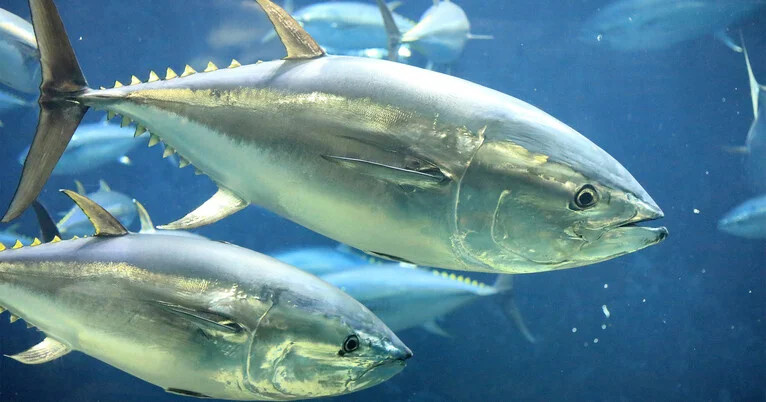
A recent study from Yale University challenges the long-standing theory that the asteroid strike which led to the extinction of non-avian dinosaurs 66 million years ago spurred the rapid evolution of tunas and other large, warm-blooded marine predators. Traditionally, it was believed that these fish evolved quickly to fill ecological niches left vacant by the demise of their larger predecessors. However, the findings from this study suggest a more complex evolutionary timeline for tunas and their relatives, which are part of the Scombridae family that includes mackerels.
Researchers conducted a comprehensive analysis combining genetic data and fossil specimens to construct a detailed evolutionary tree for Scombridae. Their findings indicate that while the origins of this family coincided with the time of the asteroid impact, the significant evolutionary traits such as large body size and the ability to regulate body temperature—known as endothermy—developed independently and gradually over millions of years following the K-Pg extinction event.
Lead author Chase Brownstein, a graduate student in ecology and evolutionary biology at Yale, emphasized that the study's results demonstrate that the evolution of tunas and their large, endothermic body plans did not occur in direct response to the extinction event. Instead, these adaptations took place over a span of 50 million years, with endothermy evolving independently at least three times within the Scombridae lineages, with two occurrences happening 10 to 15 million years after the asteroid strike.
The research highlights the importance of cautious interpretation when linking evolutionary traits to specific historical events. It shows that increases in body size among tunas and related species were not consistently correlated with the development of endothermy, which had previously been thought to be linked.
This study, published in the journal Proceedings of the Royal Society B, is part of Yale's broader initiative, Yale Planetary Solutions, aimed at addressing critical environmental challenges. Understanding the evolutionary biology of tunas is particularly relevant as these fish represent a vital nutrient source for many people globally, and their populations, such as the Atlantic bluefin tuna, have significantly declined due to overfishing.
Furthermore, the research has implications for human health, as understanding the evolution of metabolic and thermoregulatory systems in tunas may provide insights relevant to conditions such as obesity and metabolic syndrome. Senior author Thomas Near, a professor at Yale, noted the broader relevance of studying biodiversity and its evolutionary history in understanding contemporary health challenges.
Co-authors of the study include experts from various institutions, and the research was supported by multiple funding sources, including the National Science Foundation.
This study not only reshapes our understanding of tuna evolution but also underscores the intricate connections between ecological history and present-day biological systems, reinforcing the need for ongoing research in evolutionary biology and conservation efforts.














