Links Between Di(2-ethylhexyl) Phthalate and Gastric Cancer Through Computation
Di(2-ethylhexyl) phthalate (DEHP) is a widely used plasticizer prevalent in food packaging and various consumer products. Despite its commonality, the potential health risks associated with DEHP, particularly its link to gastric cancer (GC), remain inadequately understood. A recent study aimed to clarify this relationship by employing advanced computational techniques, including machine learning, molecular docking, and network toxicology.
The researchers utilized data from the Gene Expression Omnibus (GEO) to analyze gene expression profiles related to DEHP exposure and GC. They identified 18 key targets through the integration of STRING and Cytoscape tools, which facilitated the exploration of functional enrichment in biological pathways, particularly those involving calcium and cAMP signaling. Machine learning methods further narrowed down seven core genes—ADRB2, ESRRG, GRIA4, IL13RA2, NR3C2, PLA2G1B, and SULT2A1—deemed significant in the context of GC.
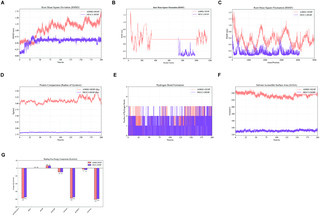
Molecular docking simulations revealed a strong binding affinity between DEHP and these target proteins, particularly highlighting ADRB2 and NR3C2 as having notable predictive importance. The study also included 200 ns molecular dynamics simulations to assess the stability of the DEHP-target complexes, confirming that these interactions maintained stable conformations throughout the simulation period.
While the findings indicate structural compatibility between DEHP and its identified target proteins, the study does not establish a direct causal relationship between DEHP exposure and changes in gene expression related to gastric cancer. Instead, it emphasizes the need for further experimental validation to understand the complex interactions and potential health implications of DEHP exposure.
This research underscores the significance of integrating computational approaches in toxicology and cancer biology, offering insights into the molecular mechanisms that may underlie the effects of environmental pollutants like DEHP on human health. The study serves as a foundational step in elucidating the potential risks associated with DEHP, particularly in relation to one of the deadliest forms of cancer.














