Endurance Exercise on a Treadmill Does Not Activate the Complement System in Young Women
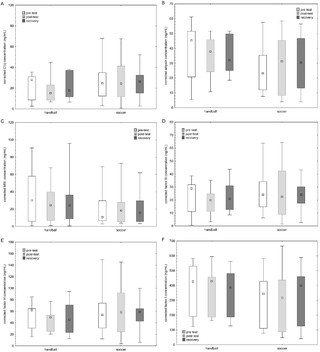
The complement system (CS) is known for its role in immune responses and tissue regeneration, yet its activation in response to physical exercise remains an area of ongoing research. A study conducted by Nowak et al. aimed to explore whether endurance efforts on a mechanical treadmill would activate the complement system in a group of well-trained young women. The participants, aged 21 to 26, were involved in team sports such as handball and soccer and underwent a progressive treadmill test until exhaustion. Blood samples were collected before, immediately after, and 24 hours post-exercise to analyze various complement proteins using advanced profiling technology.
The results indicated that the endurance effort did not significantly affect the concentrations of the complement components measured, suggesting that such physical activity does not activate the innate immune system in these trained women. This finding is notable as it implies that endurance exercise may not serve as an inflammatory trigger, which contrasts with some existing literature that suggests exercise can influence immune responses.
The study's authors highlighted that while moderate aerobic training is generally associated with reduced levels of complement components and inflammation, the specific response to acute endurance efforts, particularly in females, is less understood. Previous research has shown that various factors, including sex, age, and the type of physical exertion, can influence complement activation. For instance, hormonal differences between males and females can lead to variations in immune responses, with estrogen and testosterone playing significant roles.
Despite the lack of observed activation in this study, the authors acknowledge the limitations due to the small sample size and suggest that further research is necessary to fully understand the dynamics of complement system responses to endurance exercise in women. They propose that future studies should also consider other variables, such as menstrual cycle phases, which may affect immune responses.
In conclusion, this study adds to the body of knowledge regarding the complement system's behavior in response to physical exertion, particularly in trained young women, and opens avenues for further exploration into how different types of exercise may impact immune function.