New Typing Scheme for Giardia duodenalis Assemblage B Enhances Outbreak Analysis
Giardiasis, a gastrointestinal disease of significant public health concern, is primarily caused by the protozoan parasite Giardia duodenalis. This parasite consists of a complex of eight genetically distinct groups, known as assemblages, with assemblages A and B being the most relevant to human infections. These assemblages exhibit differences in host preferences and genetic diversity, necessitating the development of effective typing schemes for epidemiological purposes, particularly during outbreak investigations.
In a recent study, researchers from the Robert Koch Institute and other institutions developed a new multi-locus sequence typing (MLST) scheme specifically for Giardia duodenalis assemblage B. The study utilized whole genome datasets from 18 axenically cultured patient isolates to identify genomic markers suitable for molecular typing. From 42 identified genomic loci, a final set of seven markers was selected to create a nested PCR and sequencing approach, which was successfully applied to 109 out of 146 tested assemblage B samples.
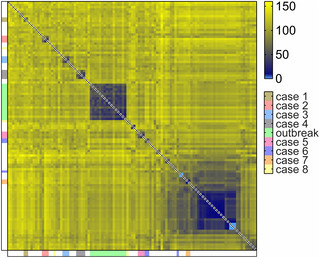
The findings indicated that assemblage B is characterized by high allelic sequence heterogeneity (ASH), complicating the typing process. The new MLST scheme not only distinguished between isolates but also revealed a bipartite population structure, with some isolates exhibiting low ASH and others showing high ASH. Notably, samples from a waterborne outbreak and epidemiologically linked cases formed distinct clusters, separate from sporadic cases, underscoring the scheme's utility in outbreak analysis.
This advancement in typing methodology is particularly important as it provides enhanced resolution for epidemiological studies of Giardia duodenalis assemblage B, which can inform public health responses to giardiasis outbreaks. The study highlights the growing need for sophisticated typing strategies as genomic data for G. duodenalis continues to expand, offering a promising avenue for future research and public health initiatives.