Study Protocol for Enhancing Infant and Young Child Feeding Practices in Maharashtra
Infant and Young Child Feeding (IYCF) practices are critical for child growth, particularly during the first two years of life. Despite various government initiatives, the National Family Health Survey (NFHS-5) indicates that approximately 35.5% of children under five in India are stunted. This issue is particularly acute in tribal areas like Palghar District, where limited access to healthcare, poverty, and knowledge gaps exacerbate the problem. This study aims to assess the knowledge, attitudes, and practices (KAP) of frontline workers and mothers regarding IYCF, and to develop and evaluate a context-specific intervention package designed to enhance IYCF practices and improve health outcomes for young children.
The proposed research will be a quasi-experimental mixed-methods study conducted over two years, divided into three phases: baseline, intervention, and post-intervention. The study will take place in the Ganjad Primary Health Centre (PHC) area, where qualitative assessments of frontline workers will inform the development of the intervention. A total of 460 mother-infant dyads, with infants aged 6 to 12 months, will be enrolled through cluster sampling from 44 Anganwadi Centres.
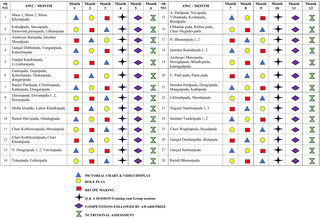
Data collection will involve structured questionnaires and anthropometric assessments to evaluate IYCF practices at baseline and post-intervention. The intervention will focus on capacity building for frontline workers and mothers through a Socio-Behavioral Communication Change approach, which will include the creation of pictorial booklets and charts, as well as the provision of hot cooked complementary food at Anganwadi Centres, along with iron, calcium, and vitamin D supplementation.
Quantitative data will be analyzed using descriptive and inferential statistics, while qualitative data will be assessed thematically. This community-based intervention aims to improve IYCF practices among tribal populations, emphasizing cultural relevance and sustainability, with the potential to inform scalable strategies and policies within the Integrated Child Development Services (ICDS) framework.
The study has received ethical approval from the ICMR-NIRRCH Ethics Committee, and informed consent will be obtained from all participating mothers. Special care will be taken to uphold ethical standards, particularly given the vulnerable nature of the study population. The findings from this research could provide valuable insights into effective strategies for improving child nutrition in similar contexts.