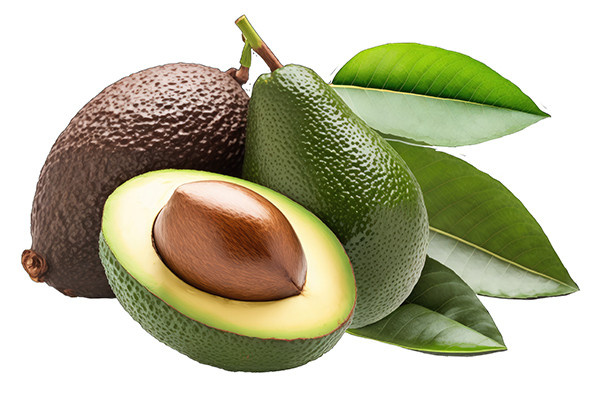
Daily Avocado Consumption Linked to Lower Cholesterol in Obese Adults

Low-density lipoprotein (LDL) cholesterol, often referred to as 'bad cholesterol', is a significant risk factor for cardiovascular disease. LDL cholesterol travels in the bloodstream within complexes of lipids and proteins known as LDL particles, which can vary in size and number. Research indicates that smaller, denser LDL particles may pose greater health risks, as they are more likely to penetrate artery walls and contribute to plaque formation, thereby increasing cardiovascular disease risk. Individuals with abdominal obesity tend to have higher concentrations of these small, dense LDL particles, making this marker particularly relevant for assessing cardiovascular risk.
A recent study published in the Journal of Clinical Lipidology highlights the potential benefits of consuming one avocado daily for adults with obesity. The study found that participants who included one avocado in their diet for six months experienced a reduction in LDL particle concentrations, which could translate to an estimated 4% lower risk of heart disease.
The research involved 786 adults aged 25 and older with abdominal obesity, defined by waist circumferences exceeding 40 inches for men and 35 inches for women. Participants were randomly assigned to either continue their usual dietary habits or to add one avocado each day without making further dietary or lifestyle changes. Notably, the addition of the avocado did not result in changes to weight or waist circumference but did lead to significant reductions in LDL levels.
Blood samples taken at the beginning and end of the six-month period revealed that those in the avocado group reduced their LDL particle concentrations by an average of 49 nanomoles per liter compared to the control group. Lead author Janhavi Damani, MS, PhD, a postdoctoral scholar in nutritional sciences at Penn State, explained that avocados contain several nutrients linked to improved heart and metabolic health, including monounsaturated fats, dietary fiber, and phytosterols. A single avocado provides approximately 9 grams of fiber and naturally occurring phytosterols, which may contribute to the observed reduction in LDL particles.
Michelle Routhenstein, MS, RD, a preventive cardiology dietitian, noted that avocados possess properties that may work together to support heart health, such as improving cholesterol levels, reducing inflammation, and enhancing overall diet quality. She explained that replacing saturated fats, like butter, with avocados rich in monounsaturated fats can help decrease the liver’s production of small, dense LDL particles that are associated with plaque buildup. Additionally, the soluble fiber and phytosterols in avocados may help reduce cholesterol absorption in the intestine, while antioxidants like vitamin E and polyphenols may protect LDL from oxidation.
The researchers estimate that the dietary change corresponds to a 4% reduction in heart disease risk. While this reduction is modest compared to the 14-29% reduction associated with improving overall diet quality, it underscores the potential of small dietary changes to enhance cardiovascular health over time. Importantly, the improvement in LDL levels was consistent across various demographics, including age, sex, race, ethnicity, and body mass index.
The findings contribute to a growing body of evidence suggesting that incorporating nutrient-rich foods into daily eating habits can improve cardiovascular health without necessitating a complete dietary overhaul. Damani emphasized that even a small, achievable dietary change, such as adding one avocado per day, can yield measurable benefits for heart and metabolic health.
However, the authors caution that while the results are promising, they should not be viewed as a standalone strategy for heart disease prevention. Instead, avocados should be part of a broader heart-healthy dietary pattern, which includes overall dietary quality, physical activity, and other lifestyle factors. Routhenstein advised thinking of avocados as replacements for less heart-healthy ingredients rather than mere additions to the diet. For example, using mashed avocado on whole-grain toast instead of butter or cream cheese can be a beneficial swap.
While the study's findings are encouraging, they may not be generalizable to all populations, as the research focused solely on adults with abdominal obesity. Furthermore, the study did not directly measure cardiovascular events, such as heart attacks or strokes; rather, the estimated reduction in heart disease risk was based on established correlations between LDL particle concentrations and cardiovascular outcomes. Overall, the research suggests that a simple dietary adjustment, like adding one avocado a day, may modestly improve an important cardiovascular risk marker in adults with obesity, but it should be accompanied by a comprehensive approach to heart health that includes healthy eating patterns and regular physical activity.