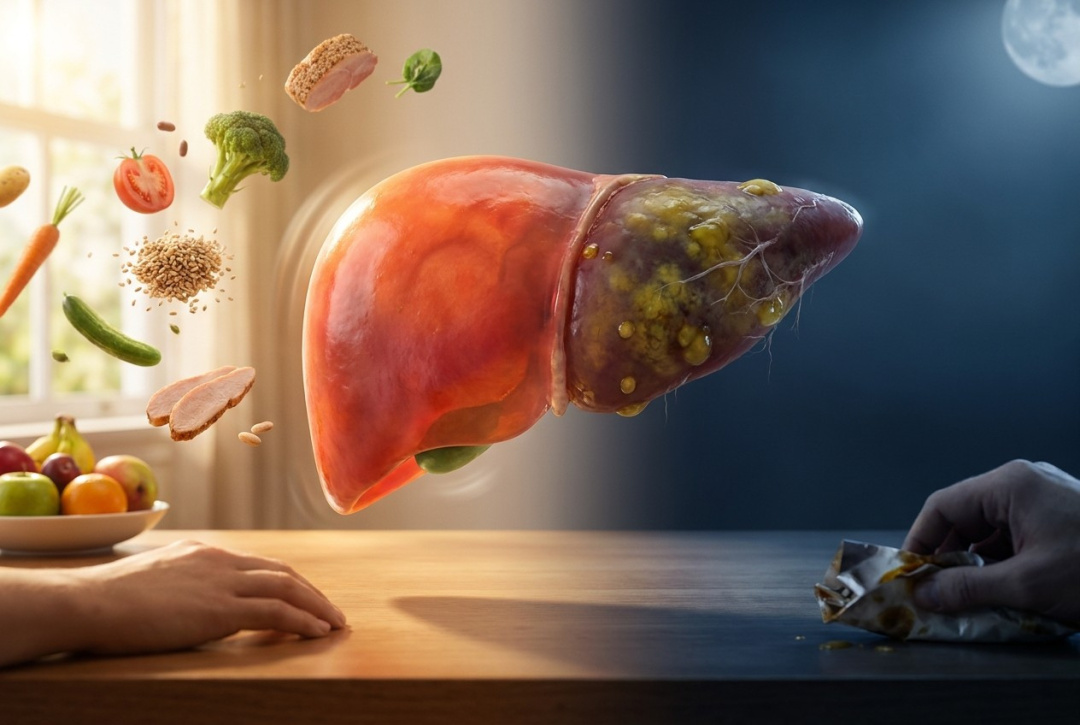
Late-Night Eating Associated with Increased Fatty Liver Disease Risk

A comprehensive 16-year study involving nearly 200,000 American adults has uncovered a concerning link between late-night eating and serious liver diseases. Conducted by researchers from Oregon Health & Science University and published in Clinical Gastroenterology and Hepatology, the study reveals that individuals who consume food after dinner or close to bedtime face a 36% increased risk of developing metabolic dysfunction-associated steatotic liver disease (MASLD) and a 28% higher risk of cirrhosis. The research draws on data from the Nurses' Health Study, Nurses' Health Study II, and the Health Professionals Follow-up Study, beginning when participants were, on average, 59 years old. This suggests that the timing of meals may be just as critical as their content for maintaining liver health.
The findings can be attributed to the body's internal circadian rhythms, which may explain why late-night eating adversely affects liver function. The liver operates on its own internal clock, which is designed to process food during daylight hours and rest at night. When food is consumed after dark, the body burns significantly fewer calories processing that meal compared to the same meal eaten during the day, leading to increased fat storage.
This timing mismatch makes the liver particularly susceptible to damage. Unlike the brain's master clock, which primarily responds to light, the liver's clock reacts to nutrients and insulin released following food intake. Late-night eating disrupts this synchronization, causing what researchers term "internal desynchrony" between the brain's clock and the liver's clock. This disruption hampers insulin effectiveness, allowing more fatty acids to accumulate in the liver and increasing fat production from carbohydrates.
The robustness of the study is underscored by multiple validation checks. For instance, when researchers accounted for rotating night-shift work, the risk of cirrhosis actually increased from 28% to 49%, indicating that shift work alone does not fully explain the connection. Furthermore, the association remained significant even after excluding participants diagnosed with liver disease during the initial four years, ruling out the possibility that pre-existing conditions influenced eating habits.
The results held true after adjusting for various factors such as age, body mass index, total calorie intake, diabetes, alcohol consumption, physical activity, and overall diet quality. This indicates that the relationship cannot be attributed solely to late eaters having higher body weight or consuming more calories.
Examining the Role of Meal Timing in Liver Health
These findings emerge against the backdrop of a 20-year global rise in cirrhosis cases, with MASLD becoming a leading cause. Traditional medical approaches have predominantly focused on caloric reduction and dietary composition, while the timing of food intake has received limited attention. The pharmaceutical industry has invested heavily in developing costly liver disease treatments, often overlooking the simple, cost-free intervention of meal timing.
In a world increasingly disconnected from natural rhythms due to artificial lighting, screen exposure, and 24/7 food availability, this study serves as a crucial reminder. It aligns with growing evidence that modern lifestyles disrupt our biological programming. The liver, already burdened by processed foods, environmental toxins, and pharmaceutical residues, may be suffering from eating habits that conflict with our body's innate design.
While researchers advise caution against making specific clinical recommendations based solely on observational data, they suggest avoiding food intake two to four hours before bedtime when feasible. This becomes a more complex issue for shift workers whose schedules clash with biological clocks.
Implications of Early Eating for Fatty Liver Disease Management
The OHSU team is currently recruiting participants for a clinical study aimed at directly monitoring eating behaviors and assessing whether earlier meal times improve clinical measures of fatty liver disease. This represents a significant step toward establishing meal timing as a practical, no-cost intervention for liver health.
This research challenges the reductionist perspective that only calorie counts and food composition are vital for metabolic health. The evidence is mounting that the body processes food differently depending on when it is consumed. For a population grappling with rising rates of fatty liver disease, the takeaway is clear: eating earlier may be one of the simplest yet most effective interventions available. While the pharmaceutical industry may have little incentive to promote this finding, adjusting meal times could be a powerful strategy for those looking to protect their liver health without relying on medication.