Clinical Trial Protocol Examines Pectin's Impact on Metabolic Health in MASLD Patients
Metabolic dysfunction–associated steatotic liver disease (MASLD) has emerged as a significant global health issue, affecting more than 30% of adults worldwide. This condition is characterized by liver fat accumulation linked to metabolic dysfunction rather than excessive alcohol consumption. The rising prevalence of MASLD is particularly notable among individuals who are overweight, have insulin resistance, or suffer from type 2 diabetes. The disease spectrum ranges from simple fat accumulation to more severe conditions such as metabolic dysfunction–associated steatohepatitis (MASH), which can progress to fibrosis, cirrhosis, and potentially liver failure.
Recent research has highlighted the connection between gut health and liver conditions like MASLD. Individuals with MASLD often exhibit increased intestinal permeability and alterations in gut microbiota composition. Dietary modifications are crucial in managing MASLD, yet adherence to such diets can be challenging due to various barriers, including restrictive meal plans and limited nutritional knowledge.
Pectin, a soluble fiber found in fruits like apples and citrus, has shown promise in therapeutic applications. It is classified into high-methoxyl (HM) and low-methoxyl (LM) pectin, with the latter being more readily fermented by gut microbiota. Fermentation of LM pectin produces short-chain fatty acids (SCFAs), which play a role in regulating inflammation and gut barrier function. Preclinical studies have indicated that LM pectin can reduce hepatic lipid accumulation and improve gut barrier integrity. A pilot clinical trial suggested that LM pectin supplementation significantly reduced pro-inflammatory cytokines in healthy adults, indicating its potential benefits for metabolic health.
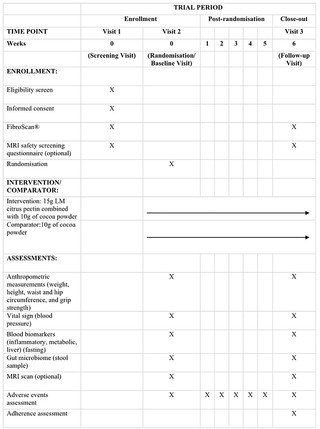
The current study protocol outlines a single-centre, double-blind, randomized, placebo-controlled trial to evaluate the effects of LM pectin supplementation on systemic inflammation and metabolic health in patients with MASLD. Conducted at Nottingham University Hospitals NHS Trust in collaboration with the University of Nottingham, the trial will involve 30 adults diagnosed with MASLD. Participants will be randomly assigned to receive either 15g/day of LM pectin or a placebo for six weeks. They will undergo baseline and post-intervention assessments, including anthropometric measurements, fasting blood samples, and stool samples. Additionally, liver stiffness and fat content will be measured using FibroScan® assessments, and a subset of participants will undergo magnetic resonance imaging (MRI) to evaluate hepatic and intestinal characteristics.
The primary objective of the study is to determine the impact of LM pectin on inflammatory markers associated with MASLD progression. Secondary objectives include assessing changes in metabolic indicators, gut microbiome composition, and non-invasive liver assessments. This trial represents the first randomized controlled study to investigate the mechanistic effects of pectin supplementation in MASLD patients, potentially providing novel insights into the role of soluble fiber in improving metabolic and hepatic health.