Deep-Sea Isopod's Unique Gene Enables Survival Without Food for Years
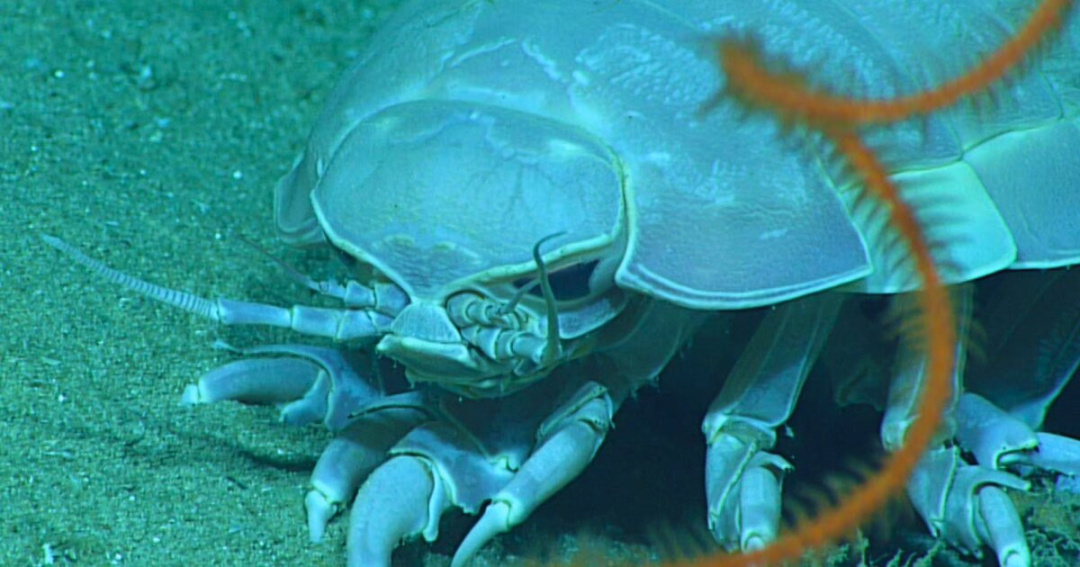
About a kilometer deep beneath the ocean surface, where sunlight fades and food becomes scarce, the giant isopod Bathynomus has developed an extraordinary ability to survive without eating for more than five years. Researchers have identified a key mechanism behind this remarkable endurance: a gene, ND1, that the isopod has acquired from symbiotic bacteria over millions of years. This gene plays a crucial role in significantly slowing the isopod's metabolism, allowing it to endure prolonged periods without food.
Lead researcher Jianbo Yuan from the Chinese Academy of Sciences explains that this study illustrates how animals can evolve in unexpected ways by borrowing genes from microbes and employing epigenetic strategies to regulate them. Isopods, a diverse group of crustaceans, inhabit various aquatic environments, including the deep ocean, where Bathynomus thrives at depths ranging from 300 meters to about 1 kilometer. Despite the extreme pressure and nutrient-poor conditions, some Bathynomus species can grow as large as half a meter, necessitating substantial energy reserves.
To investigate their unique survival mechanisms, Yuan and his team studied two isopod species: B. jamesi, found nearly 900 meters deep, and B. doederleini, which inhabits shallower waters around 300 meters. The deeper-dwelling B. jamesi is significantly larger and possesses an expandable stomach that can accommodate large meals during infrequent feeding opportunities, allowing it to store food for extended periods.
The researchers previously established that B. jamesi has a notably reduced metabolic rate, limiting its energy expenditure. Upon sequencing the genomes of both species, they discovered that the ND1 gene is pivotal in regulating the low metabolism of the deeper-dwelling isopod. Yuan highlights that this gene was not inherited from the isopod's ancestors but was acquired through horizontal gene transfer from a symbiotic bacterium.
To further explore the function of the ND1 gene, the team bioengineered zebrafish with increased ND1 expression and assessed their starvation tolerance at varying temperatures. The results showed that under normal conditions, fish with the ND1 gene consumed energy more rapidly and struggled with starvation. However, in colder conditions that mimic the deep-sea environment, these fish survived starvation for 37% longer than those without the gene. Yuan explains that in cold environments, ND1 suppresses mitochondrial activity, reduces overall energy consumption, and enhances nutrient utilization.
Additionally, the isopod's stomach contains Chlamydiae bacteria, known for their pathogenic potential in other animals, including humans. These bacteria have adapted to synthesize and store fats for the isopod over millions of years, suggesting a symbiotic relationship rather than a pathogenic one.
Marine biologist Erik Thuesen, who was not involved in the study, commended the research for integrating evolutionary biology, metabolic physiology, genomics, and epigenetics to elucidate adaptations to deep-sea life. Yuan concludes that the findings may inspire new approaches in human health, such as managing obesity by slowing metabolism or protecting cells during extreme conditions, like cold storage for transplants.
This study has been published in the journal Cell.